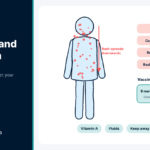
Nigeria has more people living with sickle cell disease than any other country. It also has the highest malaria burden in the world. For families affected by both, malaria is not just a fever. It can trigger painful crises, severe anaemia and life-threatening complications. Understanding the link between malaria and sickle cell disease helps families protect their children every day. This guide explains why the combination is so dangerous, how to prevent malaria, the warning signs to watch for and how treatment works.
Sickle cell trait and sickle cell disease
Sickle cell is inherited. Each person carries two copies of the gene for haemoglobin, the protein in red blood cells that carries oxygen.
AA means normal haemoglobin.
AS, called sickle cell trait, means one normal and one sickle gene. People with AS are usually healthy. The trait offers some protection against severe malaria.
SS means sickle cell disease. Red blood cells can become stiff and curved like a sickle.
Other forms of sickle cell disease, such as SC, can also cause symptoms.
Why malaria and sickle cell disease are a dangerous mix
The trait may protect against severe malaria, but sickle cell disease does not. Malaria is a major cause of illness and death in people with sickle cell disease in Africa. Malaria can:
Trigger a painful crisis, as fever, dehydration and infection make red cells sickle more
Cause severe anaemia, because malaria destroys red blood cells that are already short-lived
Enlarge the spleen, which can suddenly trap large amounts of blood, a dangerous event called splenic sequestration
Lead to acute chest syndrome, a serious lung complication
Raise the risk of stroke
Because the spleen often stops working well in sickle cell disease, the body is also less able to fight infections.
Preventing malaria every day
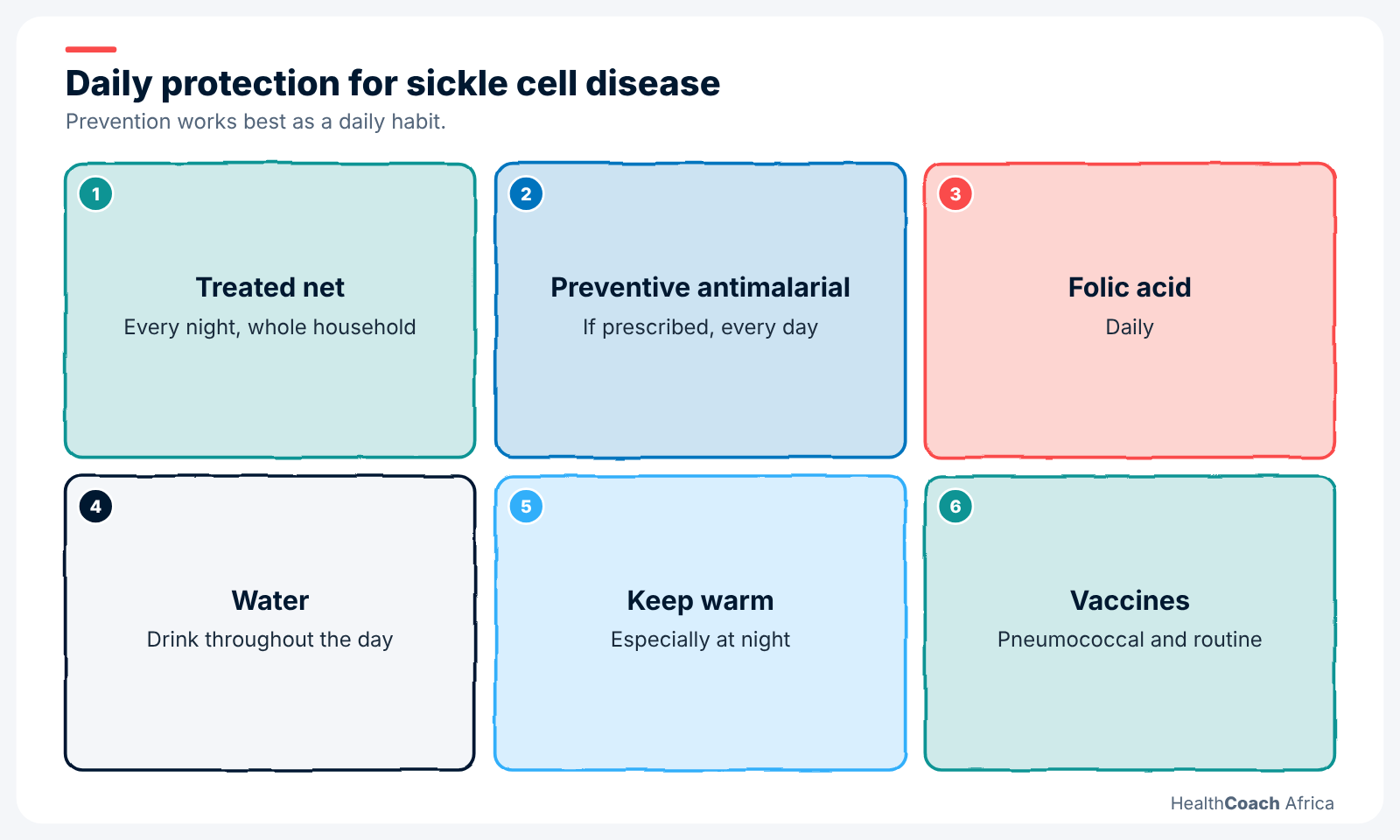
Six daily habits that prevent malaria and sickle cell crises in children and adults
Never stop preventive medicines without talking to your doctor.
Prevention is the most important part of care. Families should:
Use an insecticide-treated net every night for the person with sickle cell disease and the whole household
Take daily preventive antimalarial medicine if prescribed. Many doctors in Nigeria prescribe proguanil1 or another preventive medicine for people with sickle cell disease.
Clear stagnant water and keep the compound clean
Screen windows and doors where possible
Use repellent in the evenings, as suitable for age
Never stop preventive medicine without talking to your doctor. Missing doses increases the risk of malaria.
Malaria and sickle cell care at school
Children with sickle cell disease spend long hours at school, where mosquitoes may bite in the late afternoon. Tell teachers about your child’s condition. Ask that your child can drink water freely, use the toilet when needed and rest during hot or tiring activities. Teachers should know that fever, pain or unusual tiredness need prompt action. Good communication with the school is an important part of managing malaria and sickle cell together.
Travelling with sickle cell disease
When travelling within Nigeria or abroad, continue preventive antimalarials, folic acid and other medicines. Carry a summary of your diagnosis and medicines. Drink plenty of water, avoid long periods without rest and pack a treated net or repellent if staying somewhere new. Find out where the nearest hospital is at your destination.
Daily care for sickle cell disease
Malaria prevention works best alongside good daily care:
Folic acid every day2 to support red blood cell production
Plenty of water to reduce sickling
Keeping warm, especially at night and during the harmattan
Avoiding extreme tiredness and very strenuous exercise
Vaccinations, including pneumococcal vaccines, which protect against serious infections
Hydroxyurea, a medicine3 that reduces crises, for many children and adults
Regular clinic visits
HUBPHARM PHARMACIST’S NOTE
Daily folic acid and preventive antimalarials only protect when they are taken every day, yet they are the medicines families most often run out of. Ask HubPharm to set up a monthly sickle cell refill with folic acid, your prescribed malaria prevention medicine and pain relief, delivered with a reminder before stocks run low. A pharmacist will check each medicine against your child’s weight and any new prescriptions, including hydroxyurea. Message us the moment fever starts, and we will help you act quickly.
Warning signs that need urgent care
Seek care immediately if a person with sickle cell disease has:
Fever of 38°C or higher
Severe pain not relieved by usual painkillers
Fast breathing, chest pain or cough
Very pale skin, lips or palms
Yellow eyes that are worse than usual
A sudden swelling of the belly
Weakness on one side, slurred speech or a fit
A painful erection lasting more than two hours
Fever in a child with sickle cell disease should never be treated at home without a health worker’s review.
Testing and treating malaria in sickle cell disease
If a person with sickle cell disease has fever, a malaria test should be done promptly. Other infections must also be considered, because bacterial infections are especially dangerous.
Uncomplicated malaria is treated with an artemisinin-based combination therapy at the correct dose. The person should drink plenty of fluids and may need pain relief. Severe malaria, or malaria with severe anaemia, needs hospital care with injectable artesunate and sometimes a blood transfusion.
Malaria and sickle cell disease in pregnancy
Pregnant women with sickle cell disease face higher risks from malaria, including severe anaemia, crises and complications for the baby. They need early antenatal care in a specialist clinic, careful malaria prevention and close monitoring. Some preventive antimalarials are not suitable in pregnancy, so the doctor will review medicines.
Malaria and sickle cell: the role of nutrition
Good nutrition helps the body cope with infections and anaemia. Offer a balanced diet with beans, eggs, fish, green vegetables and fruit. Take folic acid every day as prescribed. Avoid iron supplements unless a doctor advises them, because some people with sickle cell disease do not need extra iron. A healthy diet supports the immune system and recovery after malaria and sickle cell crises.
Support for families
Caring for a child with sickle cell disease can be stressful and costly. Support groups and sickle cell foundations in Nigeria offer education, emotional support and sometimes help with medicines. Connecting with other families helps parents share practical tips on preventing malaria and managing crises.
Know your genotype
Many cases of sickle cell disease could be prevented with genotype testing before marriage or pregnancy. If both partners carry the sickle cell gene, each pregnancy has a one in four chance of a child with sickle cell disease. Knowing your genotype allows informed choices. Newborn screening helps diagnose babies early, so care and malaria prevention can start before problems arise.
Myths about malaria and sickle cell
“AS people are immune to malaria.” The trait protects against severe malaria but not against infection.
“Children with sickle cell disease do not live long.” With good care, many live into adulthood and beyond.
“Sickle cell crises are caused by spiritual attack.” Crises are triggered by infection, dehydration, cold and stress.
“Malaria medicine is dangerous for people with sickle cell disease.” Recommended antimalarials are safe and essential.
A fever plan for every family
Agree a fever plan with your sickle cell clinic. It should say when to give paracetamol, when to test for malaria, which hospital to use and what to tell staff on arrival. Keep the plan on the fridge and in your phone. Make sure grandparents, older siblings and other caregivers know it too, so that no time is lost when malaria and sickle cell crises strike at night.
Keep records together
Keep your child’s genotype result, vaccination card and clinic notes in one folder, ready for every emergency visit.
Daily malaria prevention often prescribed for sickle cell disease in Nigeria.
2
Folic acid
Pharmacy or prescription
Daily, to support red blood cell production.
3
Hydroxyurea
Prescription only
Reduces crises. Needs regular blood tests.
To order any of these, or to ask a pharmacist a question first, message HubPharm on WhatsApp or visit hubpharmafrica.com. Prescription medicines are supplied against a valid prescription.
Williams TN, Obaro SK. Sickle cell disease and malaria morbidity: a tale with two tails. Trends Parasitol. 2011;27(7):315-320. https://doi.org/10.1016/j.pt.2011.03.007
Sickle Cell Pain Crisis: Triggers, Home Care and Red Flags Nigeria has more people living with sickle cell disease than any other country, and about 150,000 babies are born with the condition here every year. For most of them, the defining experience is pain. A…
Lassa Fever Warning Signs: Early Action Saves Lives Lassa fever is a viral illness that is found in West Africa, and Nigeria reports more cases than any other country. Each year, outbreaks peak during the dry season, from about December to April. In…
Malaria and Typhoid Fever: How to Tell Them Apart… "You have malaria and typhoid." It is one of the most common diagnoses given in Nigeria, and millions of people are treated for both at the same time. Yet malaria and typhoid fever are two…
Measles Symptoms and Vaccination: What Every Parent… Measles is one of the most contagious diseases in the world. It spreads quickly among children who are not vaccinated and can cause blindness, brain damage and death. Outbreaks still occur in Nigeria, especially…