A swollen, painful calf after a long bus journey or a stay in hospital is easy to dismiss as a muscle strain. Sometimes, though, it is a blood clot in a deep vein. This is called deep vein thrombosis, or DVT. A DVT can break loose and travel to the lungs, causing a pulmonary embolism, which can be fatal. Knowing the deep vein thrombosis symptoms and the warning signs of a lung clot helps you act quickly. This guide explains the symptoms, who is at risk, how DVT is treated and how to prevent it.
What is deep vein thrombosis?
Deep vein thrombosis is a blood clot that forms in one of the deep veins, usually in the leg or pelvis. Veins carry blood back to the heart. When blood flows slowly, or the vein wall is damaged, or the blood clots more easily than usual, a clot can form.
A clot can partly or completely block the vein. If a piece breaks off, it can travel through the heart to the lungs. This is a pulmonary embolism.
Deep vein thrombosis symptoms
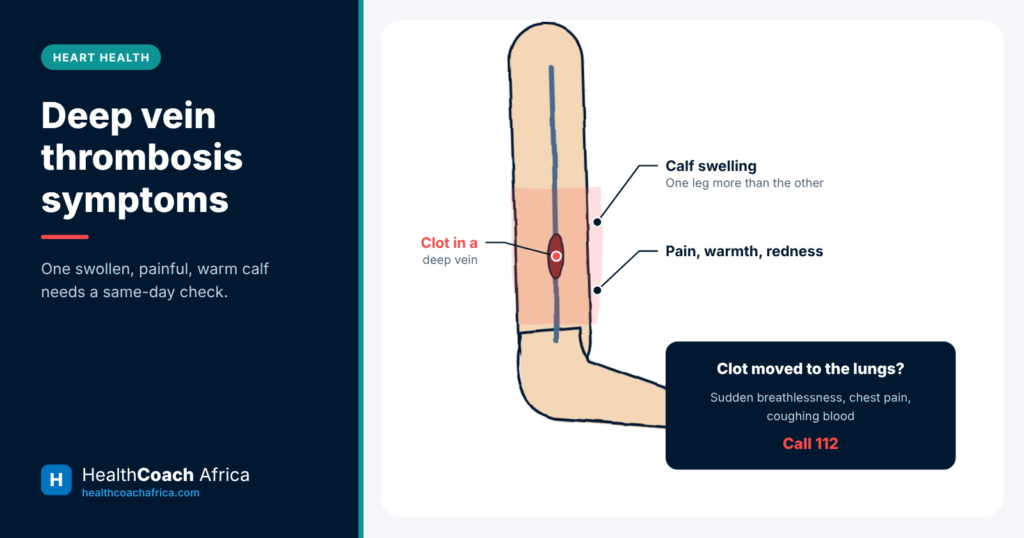
DVT usually affects one leg. Common deep vein thrombosis symptoms include:
Swelling of the calf, ankle or whole leg
Pain or tenderness, often in the calf, which may feel like a cramp
Warmth over the affected area
Red or darker skin on the leg
Swollen, more visible veins
Some people have no symptoms at all. The first sign of a DVT may be a clot in the lung.
Warning signs of a clot in the lung
Seek emergency care immediately if you have:
Sudden shortness of breath
Chest pain that is worse when you breathe in
Coughing up blood
A fast heartbeat
Feeling faint or collapsing
A pulmonary embolism is a medical emergency. Call 112 or go to the nearest emergency department without delay.
Who is at risk?
Anyone can develop a DVT, but the risk is higher if you:
Have had recent surgery, especially on the hip, knee or abdomen
Have been in hospital or bed-bound for several days
Sit still for long periods, such as on long journeys by road or air
Are pregnant or have given birth in the last six weeks
Take the combined contraceptive pill or hormone replacement therapy
Have cancer or are having cancer treatment
Are overweight
Smoke
Have had a DVT before, or a family history of clots
Have heart failure or a serious infection
Are older, especially over 60
Have sickle cell disease
Pregnancy and the weeks after birth
Pregnancy raises the risk of blood clots, and the risk stays high for about six weeks after delivery, especially after a caesarean section. Leg swelling is common in pregnancy, which can make DVT harder to spot. Swelling in one leg more than the other, with pain or warmth, needs a check. Women at higher risk may be given injections to prevent clots after birth.
Deep vein thrombosis symptoms in the arm
DVT can also occur in the arm, though this is less common. It is more likely in people with a central line, a pacemaker or cancer, or after heavy repetitive arm use. Deep vein thrombosis symptoms in the arm include swelling of the arm or hand, pain, a heavy feeling and bluish skin. Report these promptly, especially if you have a line in place.
Conditions that can look like DVT
Several conditions cause similar leg symptoms:
A torn or strained calf muscle
A burst cyst behind the knee, called a Baker’s cyst
Cellulitis, a skin infection
Swelling from heart, kidney or liver problems, which usually affects both legs
Because deep vein thrombosis symptoms overlap with these conditions, tests are needed to be sure.
How DVT is diagnosed
A doctor will examine your leg and ask about your risk factors. Tests may include:
D-dimer blood test, which helps rule out a clot if it is normal
Doppler ultrasound scan of the leg veins, the main test for DVT
CT scan of the chest if a lung clot is suspected
Prompt testing is important, because treatment needs to start quickly.
Treatment for DVT
The main treatment is anticoagulant medicine, often called a blood thinner. These medicines stop the clot from growing and lower the risk of new clots while the body slowly breaks down the existing one.
Injections, such as enoxaparin1, are often used at first or during pregnancy.
Tablets, such as rivaroxaban, apixaban or warfarin2, are commonly used for ongoing treatment.
Treatment usually lasts at least three months. Some people need longer treatment. Warfarin needs regular blood tests called INR checks. Your doctor will explain which medicine suits you.
HUBPHARM PHARMACIST’S NOTE
Blood thinners interact with many common medicines, including some antibiotics, antimalarials, painkillers and herbal products. Missing doses of the newer tablets leaves you unprotected within a day. Message a HubPharm pharmacist before you start anything new. We will check the combination, set up dose reminders and help you keep a record of your INR results if you take warfarin. We can also measure and supply compression stockings if your doctor recommends them, and deliver your blood thinner every month.
Living safely with blood thinners
Blood thinners save lives but increase the risk of bleeding. Take them exactly as prescribed. Do not miss doses or double up. Tell every doctor, dentist and pharmacist that you take a blood thinner. Avoid anti-inflammatory painkillers, such as ibuprofen and diclofenac, unless advised. Check with a pharmacist before taking herbal products.
Seek urgent help if you notice black stools, blood in your urine, vomiting blood, a severe headache or bleeding that will not stop.
Preventing DVT
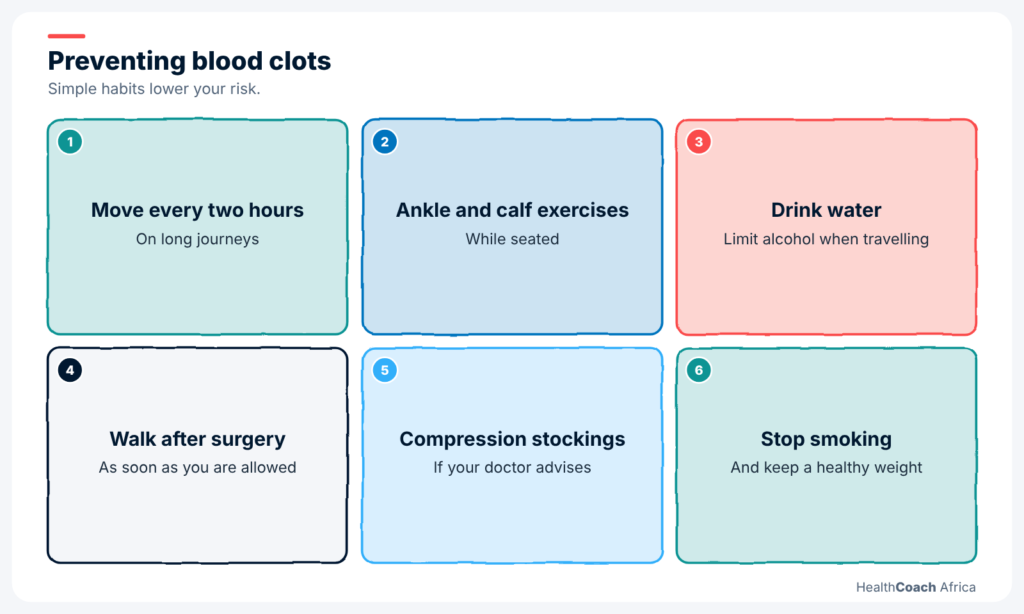
Six ways to prevent clots for people learning about deep vein thrombosis symptoms and risk
Ask about clot prevention before any operation or hospital stay.
You can lower your risk in several ways:
Keep moving. On long journeys, stop every two hours to walk, or flex your ankles and calves while seated.
Drink water and limit alcohol when travelling.
Get up and walk as soon as possible after surgery or illness.
Wear compression stockings3 if your doctor recommends them.
Keep a healthy weight and stay active.
Stop smoking.
Ask about clot prevention before surgery or if you are admitted to hospital.
Long-term effects
Some people have ongoing leg swelling, aching and skin changes after a DVT. This is called post-thrombotic syndrome. Starting treatment early, taking blood thinners as prescribed, keeping active and wearing compression stockings if advised help reduce this risk. Raise your leg when resting to ease swelling.
Travel tips
Long road trips between states and long flights both raise the risk of clots. Wear loose clothing. Choose an aisle seat if you can, so it is easy to stand and walk. Do ankle circles and calf raises every half hour. Avoid sleeping pills on long journeys, as they keep you still for hours. If you have had a DVT before, ask your doctor for advice before travelling.
Myths about DVT
“Only old people get blood clots.” Young adults can be affected, especially after surgery, during pregnancy or on the pill.
“Leg pain from a clot will go away with massage.” Massaging a DVT is not advised. Get it checked.
“Blood thinners dissolve the clot immediately.” They stop it growing while the body slowly clears it.
“If I feel well, I can stop my blood thinner early.” Stopping early raises the risk of new clots.
After a DVT
Ask your doctor how long you need treatment and whether you need tests to look for a cause. Keep active, and report any new leg swelling or breathlessness straight away.
Used at first, in pregnancy or to prevent clots after surgery.
2
Rivaroxaban, apixaban or warfarin
Prescription only
Tablet blood thinners for ongoing treatment. Do not miss doses.
3
Compression stockings
Pharmacy
Help reduce swelling and some long-term symptoms when advised.
To order any of these, or to ask a pharmacist a question first, message HubPharm on WhatsApp or visit hubpharmafrica.com. Prescription medicines are supplied against a valid prescription.
National Institute for Health and Care Excellence. Venous thromboembolic diseases: diagnosis, management and thrombophilia testing (NG158). https://www.nice.org.uk/guidance/ng158
COPD Symptoms and Treatment: Living Well With Lung Disease Chronic obstructive pulmonary disease, or COPD, is a long-term lung condition that makes breathing difficult. It is one of the leading causes of death worldwide. In Nigeria, it is often linked not only to smoking…
Spotting Fake Malaria Drugs: How to Protect Your Family Imagine giving your child a full course of malaria medicine, only to find the fever getting worse. One reason this happens is fake or poor-quality medicine. Fake antimalarials may contain no active ingredient, too little…
Rheumatoid Arthritis Early Signs: Act Early to… Rheumatoid arthritis is a long-term condition in which the immune system attacks the joints. It causes pain, swelling and stiffness, and without treatment it can permanently damage joints within the first few years. It often…
Tuberculosis Symptoms and Treatment: What You Need to Know Tuberculosis, or TB, is one of the oldest diseases known to humans, and it remains a major killer. Nigeria has one of the highest TB burdens in Africa, and many people with the disease have…