For many couples struggling to have a baby, in vitro fertilisation, or IVF, offers real hope. IVF treatment in Nigeria has grown rapidly over the past two decades, and fertility clinics now operate in many cities. Yet IVF can be expensive, emotionally demanding and surrounded by myths and misleading adverts. Understanding the process helps couples make informed decisions. This guide explains who IVF can help, each step of treatment, success rates, costs, risks and how to choose a clinic.
What is IVF?
IVF means “fertilisation in glass”. Eggs are collected from the woman’s ovaries and mixed with sperm in a laboratory. The resulting embryos grow for a few days before one or more is placed in the womb. If an embryo implants, pregnancy begins.
Who can IVF help?
IVF may be recommended for couples with:
Blocked or damaged fallopian tubes
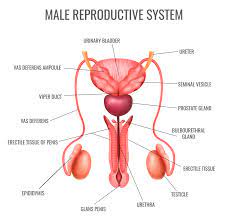
Low sperm count or poor sperm movement
Ovulation problems that have not responded to simpler treatments
Endometriosis
Unexplained infertility after other treatments
Age-related decline in fertility
It can also be used with donor eggs or donor sperm, and for couples who wish to test embryos for genetic conditions such as sickle cell disease.
Preparing your body for IVF
Good health before treatment can improve results. Both partners should:
Reach a healthy weight
Stop smoking and limit alcohol
Eat a balanced diet
Take folic acid, for the woman, at least a month before starting
Treat conditions such as diabetes, high blood pressure and thyroid problems
Review all medicines and supplements with a doctor or pharmacist
Men should avoid heat, anabolic steroids and testosterone, which harm sperm.
Simpler treatments first
IVF is not always the first step. Depending on the cause, doctors may first suggest:
Lifestyle changes, such as weight management and stopping smoking
Ovulation medicines, such as letrozole or clomifene1
Intrauterine insemination (IUI), where prepared sperm is placed in the womb around ovulation
Surgery for fibroids, polyps or tubal problems
A thorough assessment of both partners helps choose the right path.
IVF treatment in Nigeria: the main steps
Assessment. Both partners have tests, including hormone tests, an ultrasound scan, semen analysis and screening for infections such as HIV and hepatitis.
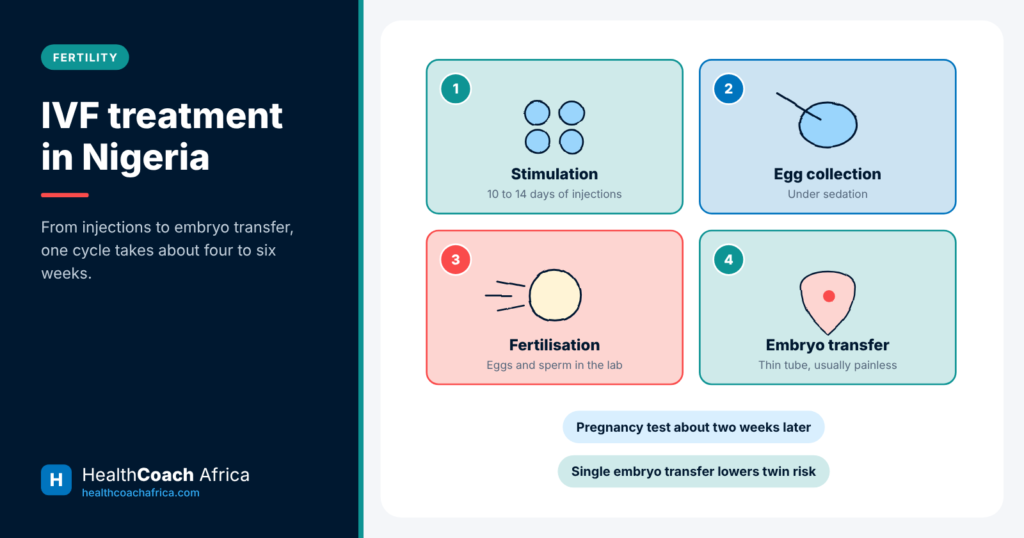
Ovarian stimulation. The woman takes hormone injections2, usually for about 10 to 14 days, to help several eggs mature.
Monitoring. Ultrasound scans and blood tests track the growing follicles.
Trigger injection. A final injection prepares the eggs for collection.
Egg collection. About 34 to 36 hours later, eggs are collected with a fine needle through the vagina, under sedation.
Fertilisation. Eggs are mixed with sperm, or a single sperm is injected into each egg (ICSI) if sperm quality is low.
Embryo growth. Embryos grow in the laboratory for three to five days.
Embryo transfer. One or two embryos are placed in the womb using a thin tube. This is usually painless.
Pregnancy test. About two weeks later, a blood test shows whether treatment has worked.
Good-quality spare embryos can be frozen for future use.
Success rates
Success depends mainly on the woman’s age and egg quality. Women under 35 have the highest chance of success per cycle. Success rates fall steadily after 35 and much more sharply after 40. Many couples need more than one cycle.
Be cautious of clinics that promise guaranteed success or very high rates without explaining how they are measured. Ask for the clinic’s live birth rate per embryo transfer for women of your age.
IVF treatment in Nigeria and the law
Nigeria does not yet have a single, comprehensive law regulating assisted reproduction, although professional bodies provide guidelines. This makes it even more important to choose a clinic carefully, ask about consent forms, embryo storage and the use of donor eggs or sperm, and keep copies of every document. Understanding your rights is part of preparing for IVF treatment in Nigeria.
Costs
IVF treatment in Nigeria is mostly paid for privately. Costs vary widely between clinics and depend on the medicines needed, the use of ICSI, embryo freezing and additional tests. Ask for a written breakdown of all costs before starting, including medicines, scans, procedures and any extra fees. Some clinics offer payment plans or packages for multiple cycles.
Choosing a clinic
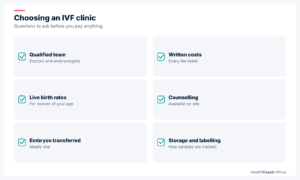
Checklist of questions for choosing a clinic for IVF treatment in Nigeria
Take your time and compare more than one clinic.
When comparing clinics, ask:
Who are the doctors and embryologists, and what are their qualifications?
What are the clinic’s live birth rates for women of my age?
How many embryos do they usually transfer?
Is counselling available?
How are embryos and samples stored and labelled?
What happens if a cycle is cancelled?
Visit the clinic, ask questions and take your time.
Risks and side effects
IVF is generally safe, but there are risks:
Ovarian hyperstimulation syndrome (OHSS), where the ovaries over-respond to medicines, causing bloating, pain and, rarely, serious illness
Multiple pregnancy, especially when more than one embryo is transferred, which raises risks for mother and babies
Ectopic pregnancy
Side effects of medicines, such as headaches, mood changes and bloating
Emotional stress
Transferring a single embryo lowers the risk of twins and triplets.
HUBPHARM PHARMACIST’S NOTE
IVF hormone injections must be kept cold and given at exact times. A warm vial or a trigger injection given an hour late can affect the whole cycle. Send your IVF medicine schedule to a HubPharm pharmacist. We deliver fertility medicines in a verified cold chain, check every pack against your prescription and can talk you through each injection on a short video call. We also send reminders for each dose and for your trigger injection, so you can focus on resting.
Medicines and injections
IVF involves several medicines, some of which must be refrigerated and injected at exact times. Your clinic will teach you how to inject. Missing or mistiming an injection can affect the cycle. Keep a written schedule, set alarms and store medicines as instructed.
IVF treatment in Nigeria and family pressure
Couples undergoing IVF treatment in Nigeria often face questions from relatives about when the baby will come. Decide together how much to share and with whom. Some couples tell only a few trusted people. Protect your privacy and your relationship. You do not owe anyone details of your treatment.
After a failed cycle
A negative pregnancy test after IVF is painful. Allow time to grieve. Ask for a review appointment to discuss what happened and whether anything can be changed for the next cycle. Many couples succeed on a second or third attempt. Others decide to stop, try donor treatment or consider adoption. All of these choices are valid.
Emotional support
IVF can be an emotional rollercoaster. Hope, anxiety, disappointment and pressure from family are common. Couples may disagree about how many cycles to try. Counselling, support groups and open communication help. Remember that infertility is a medical condition affecting both men and women, not a personal failing.
Myths about IVF
“IVF babies are not normal.” Most babies born after IVF are healthy.
“IVF always produces twins.” Single embryo transfer reduces this risk.
“IVF works the first time for everyone.” Many couples need more than one cycle.
“IVF is only for women.” Male factors are involved in many cases, and men are assessed too.
Questions to ask before you sign
Ask for every consent form in advance, and take time to read it at home. Make sure you understand what happens to spare embryos.
Getting help
IVF treatment in Nigeria offers hope to many couples when chosen carefully and supported well. The NHS guide to IVF explains the process in more detail, and our health conditions articles cover other fertility topics.For cold-chain delivery of fertility medicines and help with your injection schedule, message a HubPharm pharmacist or chat with Afiya on WhatsApp.
Medicines and products in this article
#
Medicine or product
What to know
1
Letrozole or clomifene
Prescription only
Ovulation tablets often tried before IVF.
2
Fertility hormone injections
Prescription only, keep refrigerated
Stimulate the ovaries to mature several eggs.
To order any of these, or to ask a pharmacist a question first, message HubPharm on WhatsApp or visit hubpharmafrica.com. Prescription medicines are supplied against a valid prescription.
IVF Treatment in Nigeria: A Step-by-Step Guide for Couples Infertility affects many Nigerian couples and often brings stress, stigma and family pressure. In vitro fertilisation, or IVF, has helped many of these couples to have children. The number of fertility clinics in Nigeria has…
Tips for Healthy Sperm: How Men Can Improve Their Fertility When a couple struggles to conceive, the woman is often blamed first. Yet male factors contribute to many cases of infertility. Sperm health depends on general health, lifestyle and medical conditions, and much of it…
Understanding Male Fertility: Factors, Diagnosis,… Male fertility refers to a man's ability to impregnate a woman and father a child. It is an important aspect of reproductive health and plays a significant role in human reproduction. Male fertility depends on…
Blocked Fallopian Tubes Treatment: Your Options Explained Blocked fallopian tubes are one of the most common causes of female infertility in Nigeria and across sub-Saharan Africa. Many women do not know their tubes are damaged until they struggle to conceive. The tubes…