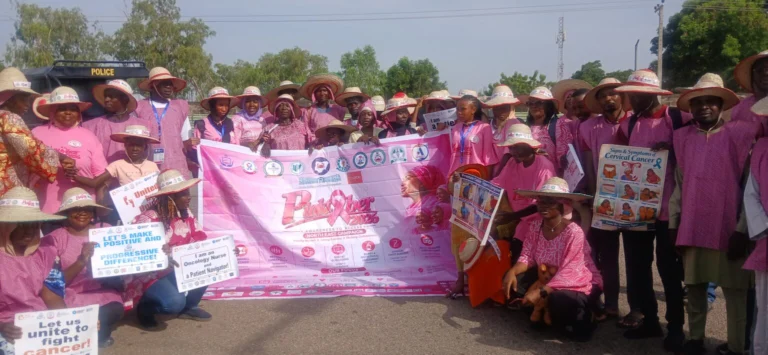
YOLA, NIGERIA — Medical researchers and oncology specialists have initiated a targeted genetic study to investigate the high prevalence of aggressive breast cancer in young women across North-East Nigeria.Announced in Yola, Adamawa State, during a Pinktober awareness campaign led by the Cancer Consciousness Initiative, the research project focuses on identifying key biomarkers and tumor mutations in patients under 40 years old.
Dr. Hannatu Ayuba, Consultant Radiation and Clinical Oncologist at the National Hospital, Abuja, and Chief Executive of the initiative, stated that clinicians across Adamawa, Borno, Taraba, and Bauchi states are observing an unusually high proportion of fast-growing, early-onset breast tumors. The study seeks to establish localized genetic profiles to optimize diagnostic pathways and targeted clinical therapies.
Diagnostic Benchmarks and Research Metrics
Disclosures provided by lead oncologists and research partners outline the clinical scope and diagnostic testing parameters:
Indicator Category
Research Parameters & Screening Targets
Lead Research Initiative
Cancer Consciousness Initiative & National Hospital, Abuja
Immunohistochemistry Support
>600 IHC diagnostic tests pledged by Roche
Molecular PCR Testing Partner
Babcock University (Ogun State) handling PCR biomarker analysis
Community Screening Target
300 women targeted across North-East states under Awareness to Access
Technical Mechanics of Receptor Subtyping and Biomarker Testing
Understanding why specialized diagnostics are vital for managing breast cancer in young women highlights key oncological testing pathways:
Triple-Negative Breast Cancer (TNBC) Dynamics: A significant proportion of young West African women present with triple-negative tumors, an aggressive subtype lacking estrogen, progesterone, and HER2 receptors that does not respond to hormone therapy.
Immunohistochemistry (IHC) Staining: IHC testing determines receptor status, allowing oncologists to distinguish between hormone-sensitive tumors, HER2-positive cancers requiring targeted biologics, and TNBC requiring aggressive chemotherapy.
Cold-Chain Specimen Preservation: Tissue biopsies gathered in North-East clinics require strict temperature-controlled logistics to preserve cellular RNA and protein integrity before specialist PCR analysis at partner laboratories.
Screening Barriers, Out-of-Pocket Costs, and Clinical Pathways
Despite the high burden of aggressive disease, diagnostic capacity remains limited across Northern Nigerian hospitals. Most secondary health facilities lack onsite immunohistochemistry capabilities, forcing patients to send tissue blocks to distant urban centers at substantial personal cost.
Dr. Garba Joshua, Head of Radiology at Modibbo Adama University in Yola, emphasized that early breast self-awareness—watching for painless lumps, asymmetrical shape changes, or bloody nipple discharge—is essential.However, because most Nigerian patients pay for biopsies, staging scans, surgery, and chemotherapy entirely out of pocket, financial constraints frequently delay diagnosis until advanced, incurable stages.
Referral Integration and Regional Oncology Access
To address systemic access gaps, the Awareness to Access campaign is establishing streamlined referral pathways that link women with suspicious breast lumps to diagnostic ultrasound, core needle biopsy, and multidisciplinary oncology teams.Subsidizing initial screening costs by 50 percent has significantly boosted community participation among women in rural local government areas like Girei.
Matching public awareness drives with affordable diagnostic infrastructure remains the single most effective strategy to improve breast cancer survival rates.By combining community screening with advanced molecular research, health leaders aim to ensure that young women across West Africa receive precise, timely, and life-saving cancer care.
Why It Matters: Aggressive breast cancers in young women require early, precise immunohistochemistry testing; expanding local diagnostic capacity keeps patients from falling into advanced, untreatable stages.
Yobe Town Hall Urges Community Action on Breast… NGURU, NIGERIA — Health workers, survivors and community leaders in Nguru, Yobe State, have called for community-driven action on breast cancer early detection, wider access to treatment and stronger partnerships to reduce deaths, the News…
Triple Negative Breast Cancer: What It Means for Treatment If your report says triple negative, you have probably already searched the phrase and found something frightening. Triple negative breast cancer is more aggressive than other types, and there is no point pretending otherwise. What…
Newly Diagnosed With Breast Cancer? Your First 30 Days Guide If you have just been newly diagnosed with breast cancer, start here. You do not need to understand everything today. You need to know what to do next, and in what order. This guide breaks…
Breast Cancer Screening in Nigeria: Where to Go and Costs Breast cancer screening in Nigeria confuses people for a simple reason: nobody tells you which test you need. A woman of 32 asks for a mammogram and is told she does not need one. A…