A swelling at the front of the neck is a familiar sight in many Nigerian communities. People call it a goitre, and some believe it is caused by drinking certain water or by a curse. In reality, a goitre is an enlarged thyroid gland, and it has clear medical causes. Some goitres are harmless. Others affect thyroid hormones, press on the windpipe or hide a nodule that needs checking. This guide explains goitre causes and treatment, the tests you need and when to see a doctor.
What is a goitre?
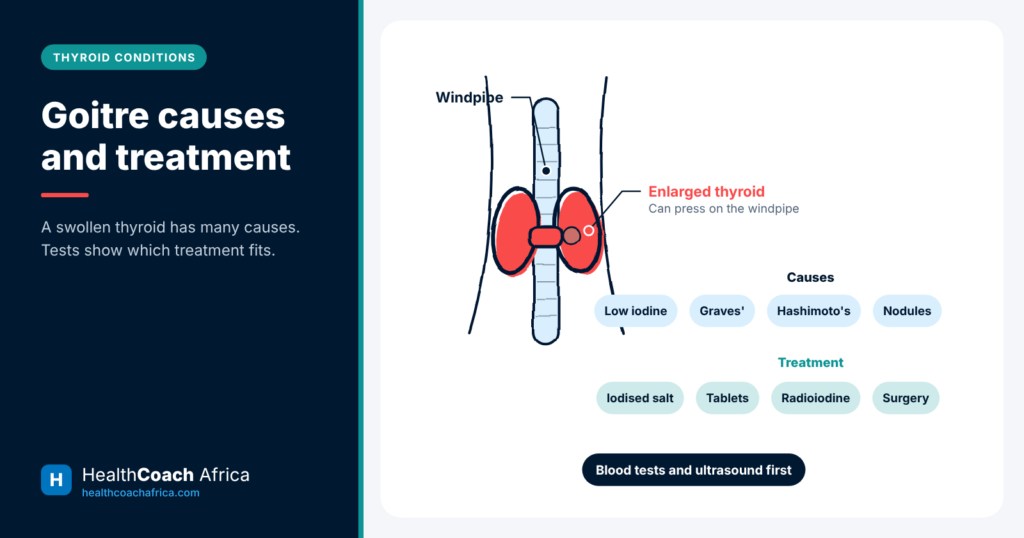
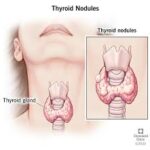
The thyroid is a butterfly-shaped gland in the front of the neck, just below the Adam’s apple. It makes hormones that control metabolism, the rate at which the body uses energy. A goitre means the thyroid has grown larger than normal.
A goitre may be:
Diffuse, meaning the whole gland is evenly enlarged
Nodular, meaning it contains one or more lumps, called nodules
The thyroid may make normal amounts of hormone, too much or too little. The size of a goitre does not tell you how well the gland is working.
Common goitre causes
Iodine deficiency. The thyroid needs iodine to make hormones. When iodine is low, the gland grows to try to capture more. Iodised salt has greatly reduced this problem in Nigeria, but it still occurs in some areas and households.
Graves’ disease. An autoimmune condition that makes the thyroid overactive and enlarged.
Hashimoto’s thyroiditis. An autoimmune condition that inflames the thyroid and often makes it underactive.
Multinodular goitre. Several nodules grow over many years, often in older women.
Single thyroid nodule. Most are harmless, but some need tests to rule out cancer.
Pregnancy and puberty, when hormone changes can cause mild enlargement.
Some medicines, such as lithium.
Goitre causes and treatment in women
Goitres are several times more common in women than in men. Hormonal changes during puberty, pregnancy and menopause can affect the thyroid. Autoimmune thyroid conditions, such as Graves’ disease and Hashimoto’s thyroiditis, are also more common in women. Women who notice a neck swelling during or after pregnancy should mention it at antenatal or postnatal visits, because goitre causes and treatment choices differ during pregnancy.
Symptoms of a goitre
Many goitres cause no symptoms other than a visible swelling. Larger goitres may cause:
A feeling of tightness in the throat
Difficulty swallowing
Coughing or a hoarse voice
Noisy breathing or breathlessness, especially when lying flat
Symptoms of thyroid hormone imbalance may also appear.
Signs of an overactive thyroid
Weight loss despite a good appetite
Fast heartbeat or palpitations
Shaking hands
Feeling hot and sweating
Anxiety and irritability
Frequent bowel movements
Bulging eyes, in Graves’ disease
Signs of an underactive thyroid
Tiredness and slowness
Weight gain
Feeling cold
Dry skin and hair
Constipation
Heavy periods
Low mood
Goitre causes and treatment: the role of nodules
Many goitres contain nodules. Most nodules are benign, meaning not cancer. Features that need closer checking include a nodule that is hard, fixed, growing quickly or associated with a hoarse voice or swollen neck glands. Ultrasound helps decide which nodules need a needle test. Knowing whether a nodule is present shapes goitre causes and treatment decisions, including whether surgery is needed.
How a goitre is investigated
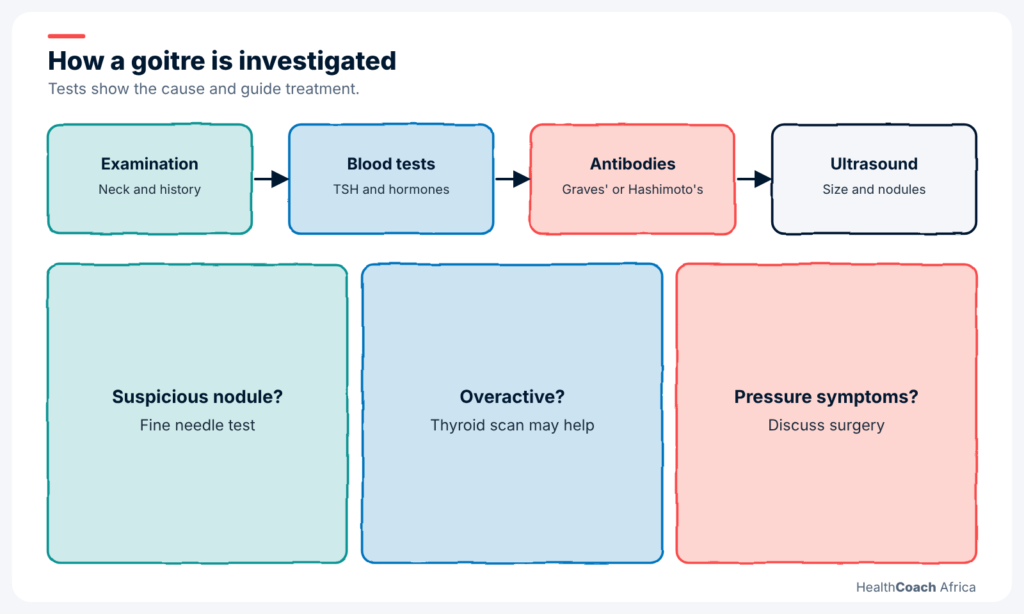
Step-by-step tests that reveal goitre causes and treatment options, from blood tests to needle biopsy
Most goitres are not cancer, but nodules may need a closer look.
Your doctor will examine your neck and ask about symptoms and family history. Tests usually include:
Thyroid function tests, measuring TSH and thyroid hormones in the blood.
Thyroid antibodies, to check for Graves’ disease or Hashimoto’s thyroiditis.
Ultrasound scan of the neck, to measure the gland and look at any nodules.
Fine needle aspiration, if a nodule looks suspicious on ultrasound, to check the cells.
Thyroid scan, in some cases, to see how active different parts of the gland are.
Goitre causes and treatment options
Treatment depends on the cause, the size of the goitre and whether hormones are affected.
Watchful waiting. Small goitres with normal hormone levels and no worrying features may simply be monitored.
Iodine. Where iodine deficiency is the cause, using iodised salt corrects it. Supplements should only be taken on medical advice.
Levothyroxine. For an underactive thyroid, daily levothyroxine tablets1 replace the missing hormone.
Antithyroid medicines. Carbimazole or propylthiouracil2 reduce hormone production in an overactive thyroid.
Radioactive iodine. A capsule or drink that shrinks an overactive gland. It is not suitable in pregnancy.
Surgery (thyroidectomy). Removing part or all of the thyroid is recommended for large goitres pressing on the windpipe, suspicious nodules or some cases of Graves’ disease.
HUBPHARM PHARMACIST’S NOTE
Many people with a goitre buy iodine tablets or herbal rubs before they have had any tests, and extra iodine can worsen some thyroid conditions. Send your thyroid results or prescription to a HubPharm pharmacist. We will explain what your tablets do, how to time levothyroxine or carbimazole, and which supplements to avoid. After surgery, we will help you understand calcium tablets and the tingling symptoms that mean you should call your doctor.
Living after thyroid surgery
After total thyroidectomy, you will need levothyroxine for life. Some people have temporary low calcium levels after surgery, causing tingling in the lips and fingers. This is treated with calcium supplements. A hoarse voice can occur but usually improves. Follow-up blood tests make sure your hormone dose is right.
Goitre and the heart
An overactive thyroid makes the heart work harder. Over time, it can cause an irregular heartbeat called atrial fibrillation, especially in older adults. Beta blocker medicines, such as propranolol3, are often used to control a fast heartbeat while antithyroid treatment starts to work. Seek urgent care for chest pain, fainting or severe breathlessness.
Children and goitre
Children can develop goitres too, often from iodine deficiency or autoimmune thyroid disease. An underactive thyroid in childhood can slow growth and affect school performance. Parents who notice a neck swelling, poor growth, tiredness or falling grades should take the child to a doctor for thyroid tests.
Living well with a goitre
Most people with a goitre live normal lives. Attend follow-up visits, take medicines as prescribed and report any change in size, voice or breathing. Use iodised salt in moderation, eat a balanced diet and avoid unregulated herbal products that claim to shrink goitres. Understanding goitre causes and treatment helps you stay calm and take the right steps.
Preventing iodine deficiency
Use iodised salt in cooking, but keep total salt intake moderate for heart health. Store salt in a closed container away from heat and sunlight, which can reduce iodine. Seafood, eggs and dairy also provide iodine. Pregnant and breastfeeding women need more iodine, so ask about a prenatal supplement that contains it.
When to see a doctor
Any new swelling at the front of the neck
A goitre that is growing
Difficulty swallowing or breathing
A hoarse voice that lasts more than three weeks
Symptoms of an overactive or underactive thyroid
Myths about goitre
“Goitre is caused by a curse.” Goitre has medical causes that can be tested and treated.
“All goitres need surgery.” Many are treated with medicine or simply monitored.
“Iodine tablets cure every goitre.” Iodine helps only when deficiency is the cause. Extra iodine can harm some people.
“Herbal rubs shrink goitres.” No herbal rub has been shown to shrink a goitre.
Questions to ask your doctor
What is causing my goitre?
Is my thyroid working normally?
Do I need an ultrasound or a needle test?
What are my treatment options?
Bring your results
Bring all previous thyroid tests and scan reports to each appointment. Comparing results over time helps your doctor judge whether a goitre is changing.
Replaces thyroid hormone when the gland is underactive or removed.
2
Carbimazole or propylthiouracil
Prescription only
Reduce hormone production in an overactive thyroid.
3
Propranolol
Prescription only
Controls fast heartbeat while antithyroid treatment works.
To order any of these, or to ask a pharmacist a question first, message HubPharm on WhatsApp or visit hubpharmafrica.com. Prescription medicines are supplied against a valid prescription.
Goitre Causes and Treatment: A Clear Guide A goitre is an enlargement of the thyroid gland, which sits at the front of the neck below the Adam's apple. It may be a small, painless swelling noticed in a photograph, or a large…
Thyroid Nodules and Cancer: What a Neck Lump Means Finding a lump in your neck can be frightening. Many people immediately fear cancer. In fact, thyroid nodules are very common, and most of them are harmless. Only a small minority turn out to be…
Neck Pain Relief Tips: Easing a Stiff, Sore Neck Neck pain is very common. Long hours on phones and laptops, poor sleeping positions, heavy loads carried on the head and long journeys in traffic all strain the neck. Most neck pain is not serious…
Thyroid Nodules: Are They Dangerous? Thyroid nodules are a common thyroid condition that often raises concern, especially when discovered during a routine check-up or neck examination. While many nodules are harmless, some can be linked to serious health problems, including…