Cervical cancer is one of the most common cancers in Nigerian women, and it claims thousands of lives every year. Almost all cases are caused by a virus called human papillomavirus, or HPV. A safe vaccine can prevent most of these cancers if given before exposure to the virus. Nigeria introduced the HPV vaccine for girls into its routine immunisation programme in 2023. This guide explains how the vaccine works, who should receive it, safety facts and where to get it.
What is HPV?
HPV is a very common virus spread through sexual contact, including skin-to-skin genital contact. Most sexually active people will be infected at some point in their lives. In most cases, the body clears the virus without any problems.
Some types of HPV, particularly types 16 and 18, can cause long-term infection of the cervix. Over many years, this can lead to abnormal cell changes and cervical cancer. HPV can also cause cancers of the anus, throat, vulva and penis, as well as genital warts.
How the vaccine works
The HPV vaccine trains the immune system to recognise and fight the most dangerous types of HPV before a person is exposed. It does not contain live virus and cannot cause HPV infection or cancer.
The vaccine works best when given before a person becomes sexually active. That is why it is recommended for young girls.
HPV vaccine for girls: who should get it?
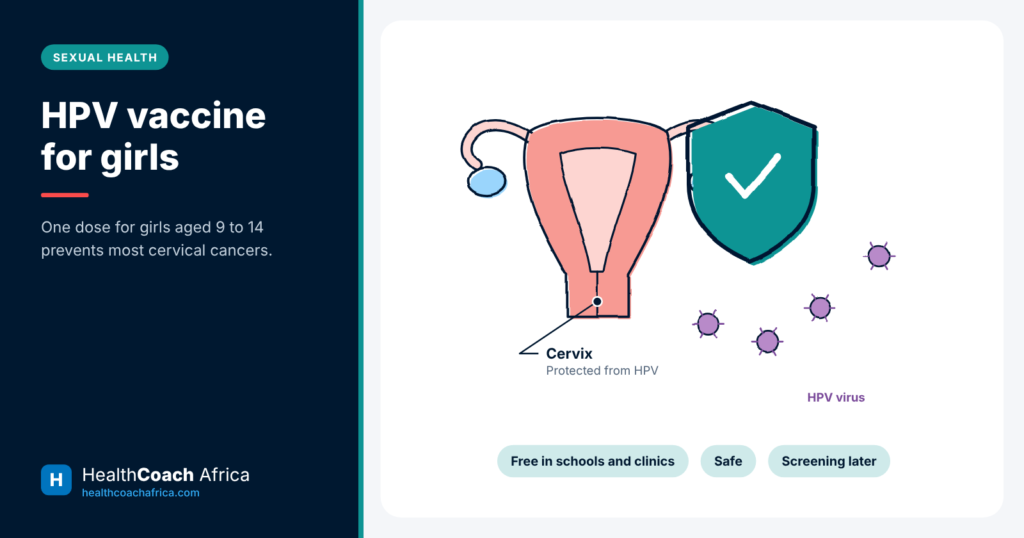
In Nigeria, the HPV vaccine for girls is offered to girls aged 9 to 14 years. It is given free through schools, health facilities and community outreach during vaccination campaigns and routine immunisation.
The World Health Organization recommends vaccinating girls aged 9 to 14 as the main way to prevent cervical cancer. Older girls and young women may also benefit, and some private clinics offer the vaccine to them.
Why one dose is enough
Research has shown that a single dose of the HPV vaccine1 gives strong, lasting protection for girls in this age group. Following this evidence, WHO recommended a one-dose schedule, and Nigeria adopted it. One dose makes it easier to reach more girls. Girls with weakened immunity, such as those living with HIV, may need more doses. Health workers will advise.
How the HPV vaccine for girls was introduced in Nigeria
In October 2023, Nigeria began a nationwide programme to give the HPV vaccine to girls aged 9 to 14. The first phase covered several states and the Federal Capital Territory, followed by a second phase that reached the remaining states. Millions of girls have been vaccinated through schools and health facilities. The vaccine is now part of routine immunisation, so girls who turn nine can receive it at their nearest health facility.
Is the vaccine safe?
Yes. The HPV vaccine has been used in many countries since 2006, and hundreds of millions of doses have been given worldwide. Safety is monitored closely. Studies have found no link between the vaccine and infertility, early puberty or other serious long-term problems.
HUBPHARM PHARMACIST’S NOTE
Parents often hear rumours about the HPV vaccine on WhatsApp groups. Send us the message or question that worries you, and a HubPharm pharmacist will reply with clear, evidence-based answers in plain language. We can tell you where your daughter can get the vaccine near you and what to expect on the day. If she has a mild fever or a sore arm afterwards, we will advise on paracetamol and when to seek help. For adult women, we can also point you to cervical screening services.
Possible side effects
Most side effects are mild and short-lived:
Pain, redness or swelling where the injection was given
Headache
Mild fever2
Feeling tired
Dizziness or fainting shortly after the injection, which is a reaction to the injection itself rather than the vaccine
Girls are asked to sit for about 15 minutes after vaccination to prevent falls from fainting. Serious allergic reactions are very rare, and health workers are trained to manage them.
Common concerns from parents
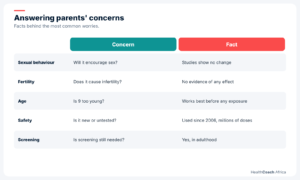
Common parent concerns about the HPV vaccine for girls, with evidence-based answers
Ask a health worker any question before the vaccination day.
“Will the vaccine encourage my daughter to have sex?” Studies show the vaccine does not change sexual behaviour. It simply protects her health for the future.
“Does it cause infertility?” No. There is no evidence that the vaccine affects fertility.
“My daughter is too young.” The vaccine is given young because it works best before any exposure to the virus.
“Why only girls?” Girls are prioritised because they face the risk of cervical cancer. Some countries also vaccinate boys.
HPV vaccine for girls with HIV
Girls living with HIV face a higher risk of HPV infection and cervical cancer. They are a priority group for vaccination. Depending on guidance, they may need two or three doses instead of one. Their HIV clinic can advise and may offer the vaccine directly. Taking HIV treatment every day also strengthens the response to the vaccine.
Where to get the vaccine
At school, during vaccination programmes
At primary health centres and government hospitals
During community outreach campaigns
At some private clinics
Bring your daughter’s immunisation card if you have one, and ask that the dose is recorded.
Screening is still needed later
The vaccine prevents most but not all cervical cancers. Women should still have cervical screening, such as HPV tests or Pap smears, from their mid-20s or 30s as advised. Screening detects early changes that can be treated before cancer develops. Encourage the women in your family to get screened.
Cervical cancer: why prevention matters
Cervical cancer develops slowly, often over 10 to 20 years after HPV infection. Early stages cause no symptoms. Later signs include bleeding after sex, between periods or after menopause, unusual discharge and pelvic pain. Many Nigerian women are diagnosed late, when treatment is harder and outcomes are worse. The HPV vaccine for girls, combined with screening for adult women, could prevent most of these deaths.
The role of schools and faith leaders
Schools, churches and mosques are trusted places for many families. When teachers and faith leaders explain the facts about the HPV vaccine for girls, parents feel more confident. Community discussions help correct rumours and encourage more girls to be protected.
Keeping records
Ask for your daughter’s vaccination to be recorded on her immunisation card or in the health facility register. Keep the card safe. In future, this record helps health workers and may be needed for school or travel.
Talking to your daughter
Explain in simple words that the vaccine protects her from a virus that can cause cancer when she is older. Reassure her that the injection is quick. Answer her questions clearly and calmly. Making the decision together builds trust.
Myths about the HPV vaccine
“The vaccine is a plan to reduce the population.” There is no evidence for this. It is used worldwide to prevent cancer.
“Only promiscuous women get cervical cancer.” HPV is very common, and any woman who has ever been sexually active can be affected.
“If my daughter has the vaccine, she will never need screening.” Screening is still recommended in adulthood.
“Natural immunity is better.” Natural infection does not always produce lasting protection.
HPV vaccine for girls who missed school
Girls who are out of school, or who missed vaccination day, can still receive the HPV vaccine for girls at primary health centres. Ask the health worker about catch-up vaccination for girls up to age 14.
Mothers can lead by example
Mothers who have regular cervical screening show their daughters that protecting reproductive health is normal and responsible. Talk about it as a family.
To order any of these, or to ask a pharmacist a question first, message HubPharm on WhatsApp or visit hubpharmafrica.com. Prescription medicines are supplied against a valid prescription.
Living With Genital Herpes: Managing Outbreaks and… A diagnosis of genital herpes often brings shock, shame and fear. Many people worry that they will never have a normal relationship again. Yet genital herpes is very common worldwide, and most people who have…
Understanding Human Papillomavirus (HPV) and Its… Human Papilloma Virus (HPV) is a significant public health concern among young girls in Nigeria. The rising cases of HPV infection and cervical cancer in the country are alarming, highlighting the urgent need for awareness,…
Cervical Cancer Screening Tests: A Clear Guide for… Cervical cancer is the second most common cancer among Nigerian women, with about 14,000 new cases and more than 7,000 deaths recorded each year. Almost all of those deaths are avoidable. Cervical cancer screening tests…
South Africa Sets Out Strategy to Eliminate Cervical… PRETORIA, SOUTH AFRICA — South Africa’s Department of Health has reaffirmed its commitment to eliminating cervical cancer as a public health threat by 2030 through its cervical cancer elimination strategy, SAnews reported on 17 November, World…