Knee pain is one of the most common reasons older adults in Nigeria visit a doctor or buy painkillers. The most frequent cause is osteoarthritis, a long-term condition of the joint. It can make walking, climbing stairs, praying, squatting and working painful. While there is no cure, many people get excellent results from the right combination of treatments. This guide explains effective knee osteoarthritis pain relief, from daily exercises to medicines and surgery.
What osteoarthritis is
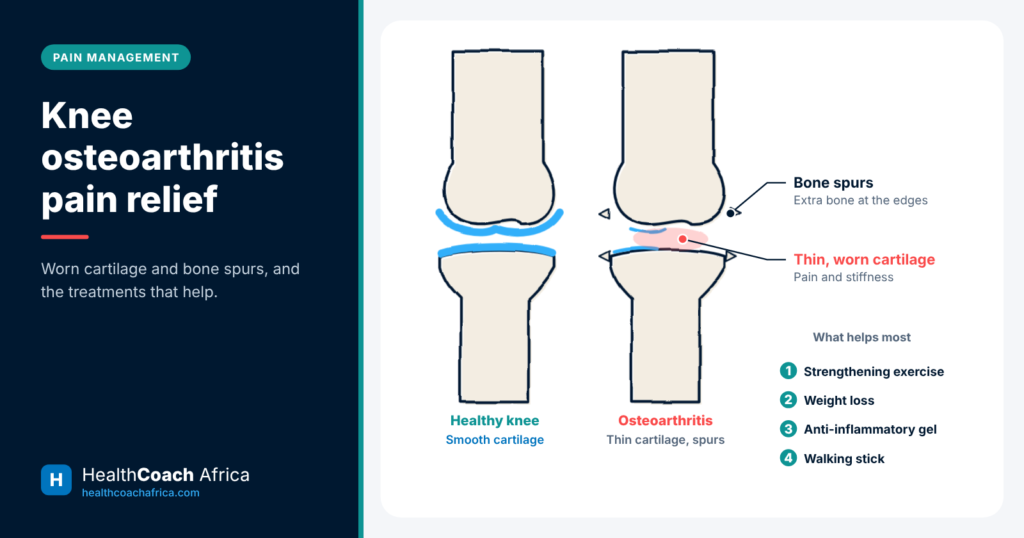
Osteoarthritis affects the whole joint. The smooth cartilage that covers the ends of the bones gradually becomes thinner and rougher. The bone underneath reacts by growing small spurs, the lining of the joint can become inflamed and the surrounding muscles may weaken.
It was once thought to be simple “wear and tear”. Today we know it is an active process that the body tries to repair. That is why movement and exercise, rather than rest, are central to treatment.
Who is most at risk?
Osteoarthritis of the knee is more common in:
People over 45
Women, especially after menopause
People who are overweight or obese
People with a previous knee injury or surgery
People whose jobs involve heavy lifting, kneeling or squatting
People with bow legs or knock knees
Those with a family history of osteoarthritis
The World Health Organization lists osteoarthritis among the leading causes of disability in older adults worldwide.
Common symptoms
Typical symptoms include:
Pain that is worse with activity and better with rest
Stiffness after resting or first thing in the morning, usually lasting less than 30 minutes
Creaking or grating sounds when moving the knee
Swelling around the joint
Reduced movement and difficulty bending fully
A feeling that the knee may give way
Symptoms often come and go, with good weeks and bad flare-ups.
How it is diagnosed
A doctor can usually diagnose knee osteoarthritis from your symptoms and an examination. An X-ray may show narrowing of the joint space and bone spurs, but the X-ray does not always match the level of pain. Blood tests are only needed to rule out other conditions, such as gout or rheumatoid arthritis.
Exercise: the foundation of treatment
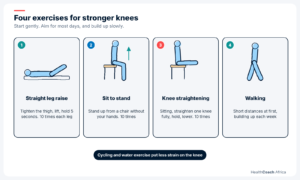
Exercise is the most effective long-term knee osteoarthritis pain relief. Strong thigh muscles support the knee and reduce the load on the joint. Useful exercises include:
Straight leg raises. Lie on your back, tighten the thigh muscle and lift the straight leg a short distance. Hold for five seconds and lower slowly.
Sit to stand. Stand up from a chair without using your hands, then sit down slowly.
Knee straightening. Sit on a chair and straighten one knee fully, hold, then lower.
Walking. Start with short distances and build up gradually.
Cycling or water exercise, which put less strain on the joint.
Some discomfort during exercise is normal. If pain is much worse the next day, do a little less, but do not stop completely.
Sketches of four simple exercises that strengthen the thigh and support knee osteoarthritis pain relief
Some discomfort during exercise is normal. If pain is much worse the next day, do a little less.
Knee osteoarthritis pain relief through daily habits
Small changes in daily life protect the knee:
Sit on a chair rather than a low stool, and use a higher seat where possible
Avoid kneeling and deep squatting for long periods, for example when washing or gardening
Use the handrail on stairs, and go up with the stronger leg and down with the painful leg
Break long periods of standing with short sits
Keep moving during the day, rather than sitting for hours
These habits, combined with exercise, provide steady knee osteoarthritis pain relief without medicine.
Weight loss makes a real difference
Every kilogram of body weight places several kilograms of force on the knees when you walk. Losing even 5% to 10% of your body weight can reduce pain and improve function. Combining weight loss with exercise gives the best results.
Medicines for knee osteoarthritis pain relief
Medicines help you stay active, which is their main purpose:
Anti-inflammatory gels and creams, such as diclofenac gel 1 , rubbed into the knee. They work well for knee pain and cause fewer side effects than tablets.
Anti-inflammatory tablets, such as ibuprofen, diclofenac and naproxen 2 , at the lowest dose for the shortest time. They can cause stomach bleeding, kidney problems and higher blood pressure, so they are not suitable for everyone.
Paracetamol may help some people, although its effect on osteoarthritis pain is modest.
Steroid injections into the knee can relieve a painful flare-up for a few weeks.
Strong painkillers such as tramadol and other opioids are not recommended for long-term use, because the risks often outweigh the benefits.
HUBPHARM PHARMACIST’S NOTE Diclofenac gel works best when you rub it in three or four times a day for at least two weeks, not only on bad days. Ask a HubPharm pharmacist which gel, tablet or knee support is safest with your blood pressure, diabetes or kidney medicines before you start.
Other helpful measures
Heat or cold. A warm towel eases stiffness, while an ice pack wrapped in cloth helps a swollen knee.
Supportive footwear with cushioned soles reduces impact.
A walking stick 3 held in the hand opposite the painful knee takes pressure off the joint.
Knee braces may help some people with unstable knees.
Pacing. Spread heavy tasks through the day and take short rests.
Using painkillers safely with other conditions
Many people with knee osteoarthritis also have high blood pressure, diabetes, heart disease or kidney problems. Anti-inflammatory tablets can worsen all of these. Anyone taking blood thinners, such as aspirin or warfarin, faces a higher risk of bleeding with anti-inflammatories. Before starting any painkiller for knee osteoarthritis pain relief, ask your pharmacist to check it against your other medicines. Gels are often the safer first choice.
Building a flare-up plan
Osteoarthritis pain comes and goes. Having a plan for bad days helps:
Reduce, but do not stop, activity for a day or two
Use ice or heat, and rest with the leg supported
Use your agreed painkiller or gel for a short period
Return to your exercises gradually as the pain settles
See your doctor if the knee becomes hot, very swollen or you cannot bear weight
A plan like this keeps knee osteoarthritis pain relief in your control. Write it on a card and keep it where you can see it. Share it with family members too, so they know how to help on difficult days and when to take you to a clinic.
Supplements and injections with weak evidence
Glucosamine and chondroitin are widely sold, but good studies show little or no benefit for most people. Injections of hyaluronic acid or platelet-rich plasma are offered by some clinics, often at high cost, but the evidence for lasting benefit is limited. Discuss these carefully with your doctor before paying.
Dangers of unregulated pain remedies
Some herbal pain mixtures and powders sold in markets contain hidden steroids or anti-inflammatory drugs. They may bring quick relief, but they can cause stomach bleeding, high blood sugar, weak bones and kidney damage. Scarification and forceful manipulation by unqualified bone setters can also cause infections and injury.
When surgery is considered
Knee replacement surgery is an option for people with severe osteoarthritis whose pain and disability continue despite good non-surgical treatment. It can transform quality of life. However, it is a major operation, and recovery takes several months of physiotherapy. Knee arthroscopy, a keyhole wash-out of the joint, is generally not recommended for osteoarthritis.
Getting help
Effective knee osteoarthritis pain relief combines exercise, weight management and the safe use of medicines. Read more about long-term pain in our article on acute and chronic pain.For advice on pain gels, safe painkiller choices with your other medicines, walking aids or knee supports, message a HubPharm pharmacist or ask Afiya on WhatsApp.
Medicines and products in this article
#
Medicine or product
What to know
1
Diclofenac gel
Pharmacy medicine
Anti-inflammatory gel rubbed into the knee. Fewer side effects than tablets.
2
Ibuprofen or naproxen tablets
Pharmacy medicine
Lowest dose for the shortest time. Not suitable for everyone with stomach, kidney or heart problems.
3
Walking stick
Over the counter
Held in the hand opposite the painful knee to take pressure off the joint.
To order any of these, or to ask a pharmacist a question first, message HubPharm on WhatsApp or visit hubpharmafrica.com. Prescription medicines are supplied against a valid prescription.
Period Pain Relief Tips for Every Woman and Girl Most women and girls experience some pain during their periods. For many, it is a mild ache. For others, it is severe enough to cause vomiting, fainting or days off school and work. Too often,…
Lower Back Pain Relief: What Works and When to Worry Low back pain is the leading cause of disability worldwide. The World Health Organization estimates that it affected 619 million people in 2020, and almost everyone experiences it at least once. Market traders, drivers, office…
4 Types of Exercise for your General Well-being To feel better about your health and add years to life, incorporate exercise into your daily routine. Exercise involves physical activities that increase the heartbeat and help condition the body. it is fundamental for improving…
Migraine Triggers and Treatment: How to Take Back Control A migraine is much more than a bad headache. It is a neurological condition that can cause severe, throbbing pain, sickness and sensitivity to light and sound, often forcing people to lie down in a…