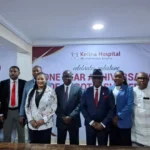
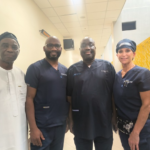
ABUJA, NIGERIA — As nigeria opens first robotic surgery academy to train 400 clinical specialists over the next two years, federal authorities and private healthcare partners have launched a landmark initiative to transform West Africa’s surgical infrastructure. Inaugurated by Minister of Education Dr. Tunji Alausa, the RHV Robotic Surgery Academy—established by Redeemer’s Health Village (RHV) alongside RoboMed Global, Redeemer’s University, and the National Postgraduate Medical College of Nigeria (NPMCN)—aims to expand high-precision surgical capacity while curbing outbound medical tourism.
Equipped with two advanced robotic surgical consoles valued at $4 million, the faith-based medical facility in Abuja will deliver specialized training across urology, gynecology, and general surgery following RHV’s successful execution of Nigeria’s pioneer telesurgical procedure.
Operational Benchmarks for Nigeria Opens First Robotic
Data presented by the Ministry of Education, NPMCN, and Redeemer’s Health Village outline the academy’s operational targets:
Project & Training Category
National Surgical & Education Benchmarks
Specialist Training Target
400 specialists & surgeons trained over a 24-month timeline
Surgical Equipment Capital
$4 million invested in 2 state-of-the-art robotic consoles
Institutional Governance
Accredited fellowship diplomas via NPMCN & Redeemer’s University
Public Scholarship Funding
TETFund sponsorship approved under local training components
Technical Mechanics: Nigeria Opens First Robotic
Understanding the ecosystem approach behind why nigeria opens first robotic surgical instruction centers highlights key clinical and technical parameters:
Ecosystem-Wide Workforce Development: Rather than training surgeons in isolation, the academy’s curriculum incorporates operating theater nurses, biomedical support engineers, and healthcare administrators. Redeemer’s University will manage technical and nursing streams, while NPMCN oversees postgraduate surgical fellowship certification.
Minimally Invasive Clinical Advantages: Console-operated robotic arms provide multi-articulated wrist movements and 3D high-definition visualization, enabling complex procedures through micro-incisions. Clinical benefits include reduced intraoperative blood loss, lower post-operative infection rates, and shorter hospital stays.
TETFund Medical Expansion Integration: The federal government has committed N250 billion to medical education over the past two years. Incorporating the academy as one of 28 TETFund-approved local scholarship institutions ensures qualified public hospital surgeons receive fully funded training.
Federal Medical Education Targets, Brain Drain, and Funding
Minister Alausa emphasized that expanding specialized training aligns with broader federal health workforce goals, projecting that annual medical school admissions will reach 20,000 students nationwide within two years.
The inauguration follows recent calls by President Bola Tinubu urging West African medical colleges to create localized professional growth opportunities to counter medical brain drain (japa). By establishing local fellowship programs in advanced subspecialties like robotic surgery, federal health managers aim to retain top clinical talent within Nigerian tertiary hospitals.
Public Health Accessibility, Insurance, and Sector Outlook
While local robotic surgery training represents a major technology transfer, public health economists note that overall patient reach depends on treatment affordability. High initial capital expenditures and imported disposable instruments make robotic procedures costly.
Establishing public-private co-financing models and securing National Health Insurance Authority (NHIA) reimbursement coverage will prove crucial in determining whether ordinary Nigerian patients can access these advanced procedures alongside private health consumers as nigeria opens first robotic surgical training hubs.
Why It Matters: Localizing robotic surgery training reduces expensive overseas medical travel, but integrating these advanced procedures into national health insurance plans will determine whether public hospital patients benefit.
Nigerian Hospital Achieves Milestone with 50 Robotic… LAGOS, NIGERIA — Surgeons at Kelina Hospital, a private healthcare facility, have completed over 50 minimally invasive robotic operations to remove cancerous prostates within a single year, recording zero blood transfusions since June. Announcing the…
First Tele-Robotic Kidney Surgery Performed in Nigeria ABUJA, NIGERIA — Nigerian medical specialists have successfully removed a cancerous kidney using a remotely guided robotic platform. According to clinical statements released by participating hospitals, the successful procedure marks the country's first tele-robotic kidney…
STI Testing in Nigeria: A Confidential Guide to… Sexually transmitted infections, or STIs, are very common, and many cause no symptoms at all. That means you can have an infection, pass it on and develop complications without knowing. Testing is the only way…
Tramadol and Codeine Addiction: Signs, Dangers and… Tramadol and codeine are opioid medicines used to relieve pain and, in the case of codeine, to suppress coughs. Used correctly for a short time, they are helpful. However, misuse has become a serious problem…