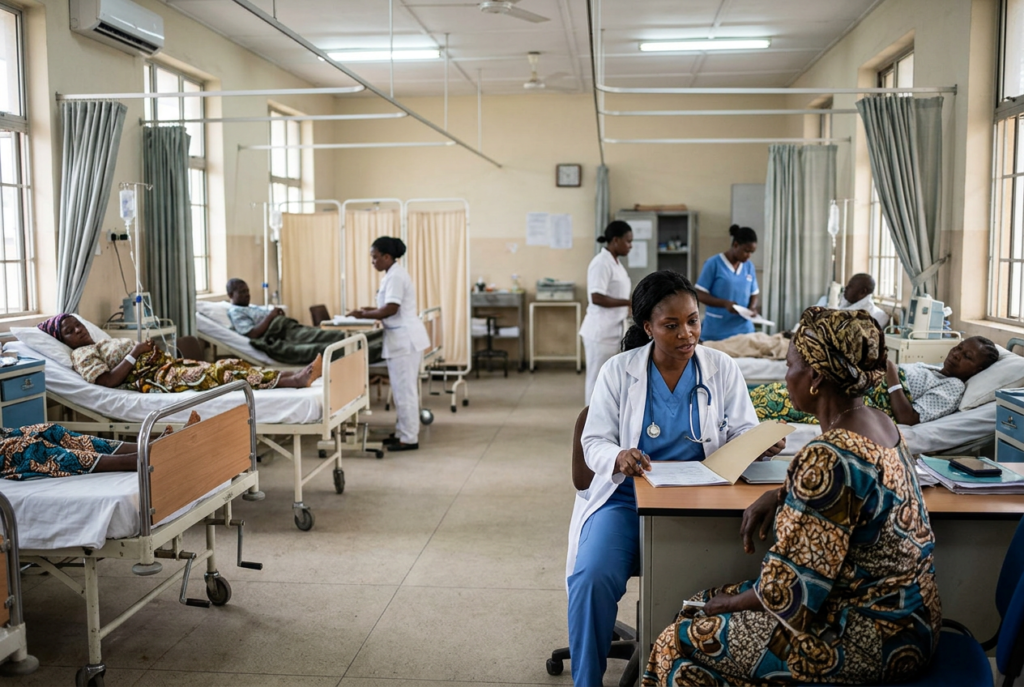
ILORIN, NIGERIA — Addressing severe workforce depletion and institutional management gaps, a senior surgeon has advocated integrating structured health leadership into undergraduate and postgraduate curricula for nigerian doctors healthcare leadership. Speaking at the tenth anniversary of the Ilorin Emirates Medical Doctors’ Group, Prof. Sulyman Kuranga emphasized that clinical competence alone is insufficient to manage complex tertiary health institutions.
Kuranga, a Professor of Urological Surgery and former Head of Urology at the University of Ilorin Teaching Hospital, proposed establishing a dedicated Nigerian College of Medical Leadership to bridge systemic administrative deficits.
Workforce and Financing Metrics for Nigerian Doctors
The call for structural leadership reforms comes amid sharp contractions in the national health workforce and heavy out-of-pocket patient spending:
Health System Parameter
Statistical Metric & National Scope
Active Practising Doctors
55,000 in 2025 (Down 16.9% from 66,241 in 2024)
Physician-to-Patient Ratio
1 doctor per 5,000 people (<4% working in rural areas)
Historical Medical Brain Drain
16,000+ doctors emigrated between 2017 and 2023
Out-of-Pocket Expenditure
76% of national health spending paid directly by patients
Operational Imperatives for Nigerian Doctors Healthcare Leadership
Prof. Kuranga noted that while senior clinicians routinely assume chief medical director roles, formal administrative instruction remains completely absent from standard medical school curricula. Developing competencies in leadership of nigerian doctors healthcare is essential for optimizing hospital operations under constrained fiscal conditions:
Resource Allocation & Budgeting: Equipping hospital directors to balance scarce operational funds across clinical salaries, equipment maintenance, and pharmaceutical stock.
Workforce Retention & Morale: Mitigating health worker burnout, addressing unpredictable postings, and resolving labor grievances before they trigger industrial action.
Governance & Inter-Professional Management: Navigating complex relationships with non-physician health unions, regulatory bodies, and public health insurance authorities.
Structural Reforms for Nigerian Doctors Healthcare Leadership
Optimizing hospital governance directly impacts workforce retention, as poor management, broken diagnostic tools, and unclear career pathways accelerate doctor emigration. Introducing accredited leadership qualifications ensures clinical executives possess the fiscal and managerial tools required to run modern healthcare facilities effectively.
Why It Matters: Coupling clinical expertise with formal management training ensures hospital leaders can optimize scarce budgets, maintain equipment, and improve retention amid an escalating medical brain drain.
Professor Mojisola Adeyeye: The Pharmacist Who… When Professor Mojisola Adeyeye walked into NAFDAC headquarters in November 2017, she inherited an agency with a debt of more than three billion naira, laboratories that did not work and a reputation that its own…
Nigeria Bets on Specialised Health Universities to… AZARE, NIGERIA — The Federal Government of Nigeria is increasingly leaning on six specialized federal health universities to resolve severe workforce deficits, though critical bottlenecks in clinical accreditation, infrastructure funding, and medical brain drain threaten…
Shortage of Oncology Nurses Threatens Cancer Care in… ABUJA, NIGERIA — Highlighting severe human resource deficits across tertiary health centers, the shortage of oncology nurses in Nigeria poses a critical threat to national cancer treatment delivery. According to estimates provided by nursing education…
Nigeria Opens First Robotic Surgery Academy ABUJA, NIGERIA — As nigeria opens first robotic surgery academy to train 400 clinical specialists over the next two years, federal authorities and private healthcare partners have launched a landmark initiative to transform West Africa's…