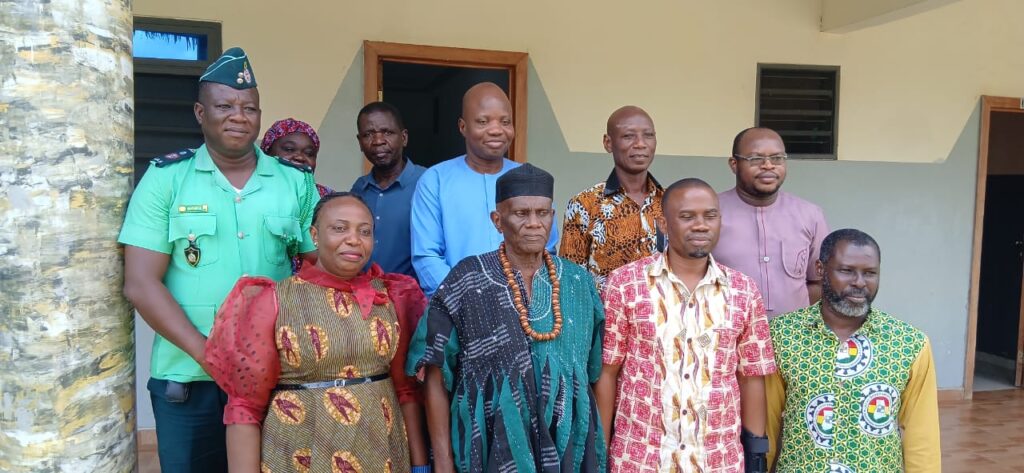
Ghana’s Oti Regional Minister, John Kwadwo Gyapong, has inaugurated an Oti Region MPDSR taskforce to investigate and respond to maternal and newborn deaths, Adom Online reported on 11 November.
MPDSR stands for Maternal and Perinatal Death Surveillance and Response. The taskforce, supported by the United Nations Population Fund (UNFPA), aims to strengthen monitoring, investigation and response to maternal and perinatal deaths in the region.
“Let your work be guided by evidence, accountability and a shared determination to save lives,” Gyapong told members.
The launch reflects growing concern about maternal and newborn deaths in parts of Ghana, particularly in regions with weaker health infrastructure.
What the Oti Region MPDSR taskforce will do
The taskforce brings together health professionals, representatives of the Ghana Health Service (GHS) and other stakeholders. It is expected to improve the collection and use of data, promote accountability and support evidence-based decisions, according to the report.
Gyapong urged members to work with commitment, professionalism and urgency, and thanked UNFPA for its continued support on behalf of the Oti Regional Coordinating Council.
UNFPA has supported MPDSR systems in several African countries, providing training for review committees, tools for collecting data and support for turning recommendations into action. The Oti Region MPDSR taskforce is expected to coordinate reviews across districts and report findings to regional health authorities.
How MPDSR works
Under MPDSR, every maternal death and every stillbirth or newborn death around the time of birth is meant to be reported quickly and reviewed. A review team examines what happened, from the woman’s first antenatal visit to the moment of death, to identify delays and failures, such as late referral, lack of blood, missing medicines or gaps in staff skills.
The “response” part is crucial. Reviews are supposed to lead to concrete action, such as training staff, buying equipment, improving transport or changing referral routes, and to follow-up checks that these actions have been taken.
WHO recommends MPDSR as a way to turn each death into lessons that prevent the next one. Reviews are designed to be no-blame, so that health workers can speak honestly about what went wrong without fear of punishment.
Community verbal autopsies, in which trained interviewers speak with families about deaths that happened at home or on the way to hospital, help capture deaths that would otherwise go unrecorded. In rural regions, many deaths occur outside facilities, so community reporting is essential for an accurate picture.
Why Oti needs it
Oti is one of Ghana’s newest regions, created in 2019 from part of the Volta Region. Its largely rural population is spread across areas with long distances to hospitals, limited roads and difficult river crossings, which can delay emergency care for women with complications.
Many districts in northern and newly created regions face shortages of skilled midwives and doctors, especially specialists such as obstetricians and anaesthetists. Ghana’s anaesthetists have threatened to withdraw services from 1 December, which could further affect emergency caesarean sections in district hospitals.
Common causes of maternal death in Ghana include severe bleeding after birth, hypertensive disorders such as pre-eclampsia, infections and complications of unsafe abortion. Newborn deaths are often linked to prematurity, birth asphyxia and infections.
Many of these deaths can be prevented with timely care: drugs such as oxytocin to prevent heavy bleeding, magnesium sulphate for pre-eclampsia, antibiotics for infections, newborn resuscitation and kangaroo mother care for small babies. MPDSR reviews often reveal that these simple interventions were missing or delayed.
National attention on maternal deaths
Ghana’s Ministry of Health has called for dedicated funding to tackle rising maternal deaths, and the National Development Planning Commission has called for accountability over preventable deaths, according to related reports listed by Adom Online.
Ghana has made progress on skilled birth attendance and facility deliveries, but health officials say quality of care, emergency transport and referral remain weak in many districts.
Community engagement is also central. Health officials in many regions work with traditional leaders, women’s groups and community health volunteers to encourage antenatal attendance and facility births, and to arrange transport when emergencies occur. The Oti Region MPDSR taskforce could use review findings to target such outreach where it is most needed.
The Oti Region MPDSR taskforce will be judged by whether its reviews lead to changes on the ground. Publishing regional summaries of findings and actions taken, while protecting confidentiality, would help communities and leaders track progress.
Why it matters: Reviewing every maternal and newborn death, then fixing the gaps, is one of the most direct ways to stop the next preventable death.
UNFPA Supports Treatment of 104 VVF Patients in Kaduna The United Nations Population Fund (UNFPA) has provided crucial support for the treatment of 104 patients suffering from Vesico Vaginal Fistula (VVF) in Kaduna State. VVF, also known as obstetric fistula, is a distressing condition…
Diabetes in Nigeria: Why Blood Sugar Control Fails Diabetes in Nigeria does not usually fail in the clinic. Among people who reach a specialist and stay in care, control is often reasonable. It fails in the years before anyone tests you, and it…
Tramadol and Codeine Addiction: Signs, Dangers and… Tramadol and codeine are opioid medicines used to relieve pain and, in the case of codeine, to suppress coughs. Used correctly for a short time, they are helpful. However, misuse has become a serious problem…
Nutrition During Cancer Treatment: What to Eat and Why Cancer and its treatment place heavy demands on the body. Chemotherapy, radiotherapy and surgery all increase your need for energy and protein, while side effects such as nausea and mouth sores make eating harder. Good…