Fatty liver disease is becoming one of the most common liver conditions in the world, and Nigeria is no exception. It is closely linked to rising rates of obesity, type 2 diabetes and high blood pressure. Many people are told they have a “fatty liver” after an abdominal scan done for another reason. Because fatty liver disease symptoms are often absent, the condition can quietly progress for years. The good news is that, caught early, it can often be reversed. This guide explains what to look for and what to do.
What fatty liver disease is
A healthy liver contains little or no fat. In fatty liver disease, fat builds up inside liver cells. When this happens because of excess weight, diabetes and related problems, rather than heavy drinking, it is now called metabolic dysfunction-associated steatotic liver disease, or MASLD. You may still hear the older name, non-alcoholic fatty liver disease, or NAFLD.
Fatty liver caused mainly by alcohol is called alcohol-related liver disease. Many people have both factors.
How it progresses
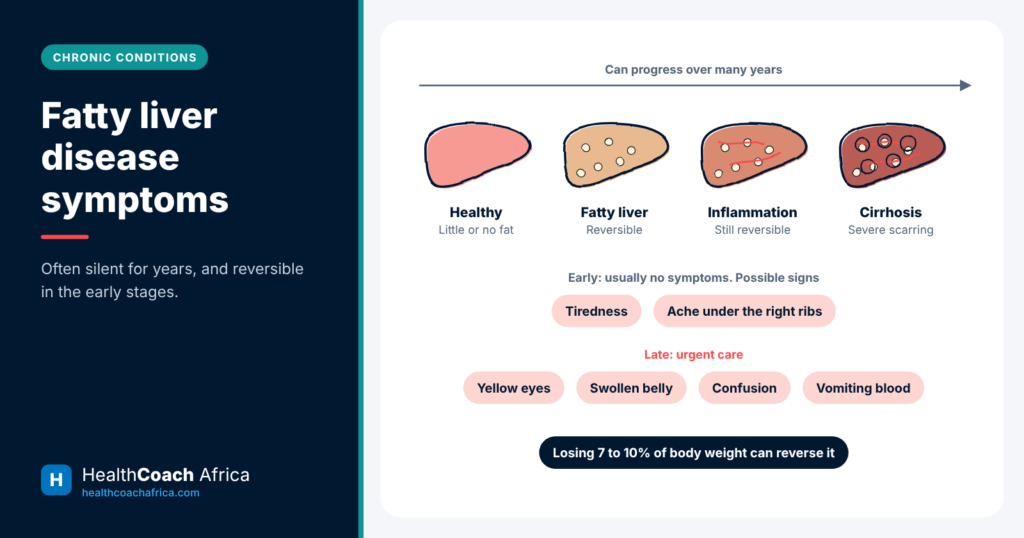
Fatty liver disease develops in stages:
Simple fatty liver. Fat builds up, but there is little inflammation. This stage is common and usually harmless if it does not progress.
Inflammation. In some people, the fat triggers inflammation and damage to liver cells. This is called steatohepatitis.
Fibrosis. Ongoing inflammation causes scar tissue to form.
Cirrhosis. Severe scarring changes the structure of the liver, which can lead to liver failure and liver cancer.
Progression usually takes many years, and only a minority of people reach cirrhosis. Early stages can be reversed.
Who is at risk?
You are more likely to develop fatty liver disease if you:
Are overweight, especially with fat around the waist
Have type 2 diabetes or prediabetes
Have high blood pressure
Have high cholesterol or triglycerides
Have polycystic ovary syndrome or an underactive thyroid
Drink a lot of sugary drinks
Are physically inactive
People with type 2 diabetes have a particularly high risk of the more serious stages.
Fatty liver disease symptoms
Most people have no symptoms in the early stages. When fatty liver disease symptoms do appear, they may include:
Tiredness
A dull ache or discomfort in the upper right part of the abdomen
Unexplained weight loss in later stages
When the liver is badly scarred, symptoms of cirrhosis can develop:
Yellowing of the skin and eyes, called jaundice
A swollen abdomen caused by fluid
Swelling of the legs and ankles
Itchy skin
Easy bruising and bleeding
Confusion or drowsiness
Vomiting blood or passing black stools
These later signs need urgent medical attention.
Why fatty liver disease symptoms are easy to miss
The liver has no pain nerves inside it, and it has a large reserve. It can carry on working even when a significant part is damaged. As a result, fatty liver disease symptoms usually appear only when the disease is advanced. Tiredness and mild discomfort are easily blamed on work, stress or poor sleep.
This is why people at risk should not wait for symptoms. If you have diabetes, obesity or high blood pressure, ask your doctor whether your liver should be checked, even if you feel completely well.
How it is diagnosed
Fatty liver is often first seen on an ultrasound scan. Liver blood tests may show raised liver enzymes, but they can also be completely normal, even with significant disease.
To assess the risk of scarring, doctors use a simple calculation from routine blood tests called the FIB-4 score. A special scan called transient elastography, often known by the brand name FibroScan, measures liver stiffness. A liver biopsy is rarely needed. Your doctor may also test for hepatitis B and C 1 , which are common in Nigeria and also damage the liver.
Weight loss: the most effective treatment
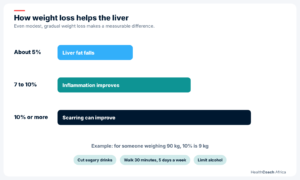
The single most effective treatment for fatty liver disease is gradual weight loss. Research shows that:
Losing about 5% of your body weight reduces liver fat
Losing 7% to 10% can reduce inflammation
Losing 10% or more can improve scarring
For someone weighing 90 kg, a 10% loss is 9 kg. Aim to lose about half to one kilogram a week. Crash diets and very rapid weight loss can make liver inflammation worse.
Bar diagram of weight loss levels and liver benefits, for people with fatty liver disease symptoms
Aim for about half to one kilogram a week. Crash diets can make liver inflammation worse.
Eating for a healthier liver
These changes help to reduce liver fat:
Cut sugary drinks. Soft drinks, malt drinks, sweetened juices and energy drinks are rich in fructose, which the liver turns into fat.
Reduce refined carbohydrates. Smaller portions of white rice, white bread, pastries and swallows help.
Eat more vegetables, beans and whole grains. They provide fibre and keep you full.
Choose healthy fats. Fish, groundnuts and small amounts of vegetable oil are better than fried foods and fatty meat.
Limit processed and fried foods, such as sausages, fried snacks and fast food.
Some studies suggest that regular coffee, without sugar, may protect the liver. It should not replace other changes.
Exercise helps even without weight loss
Physical activity reduces liver fat even if your weight stays the same. Aim for at least 150 minutes of moderate activity a week, such as brisk walking, dancing or cycling. Add strength exercises twice a week. Reducing time spent sitting also helps.
HUBPHARM PHARMACIST’S NOTE Bitters, herbal liver cleanses and some slimming products have caused liver injury in people who already had fatty liver disease. Send a HubPharm pharmacist a photo of any product before you take it, and we will tell you what is known about its safety.
Alcohol and fatty liver
If you have fatty liver disease, alcohol adds extra damage. Cut down as much as possible. If you have scarring or cirrhosis, avoid alcohol completely.
Managing related conditions
Controlling diabetes, blood pressure and cholesterol protects both the liver and the heart. In fact, people with fatty liver disease are more likely to die from heart disease than from liver disease. Statins for high cholesterol 2 are safe in fatty liver disease and should not be stopped because of it.
A simple plan for the first three months
Big changes are easier when broken into steps:
Weeks 1 to 2: replace all sugary drinks with water, unsweetened tea or zobo without sugar.
Weeks 3 to 4: reduce portions of rice, swallows and bread by about a quarter, and add a portion of vegetables to each meal.
Weeks 5 to 8: walk briskly for 30 minutes on at least five days a week.
Weeks 9 to 12: cut down on fried foods and alcohol, and add two strength sessions a week.
Weigh yourself once a week and track your waist size. After three months, your doctor may repeat your blood tests or scan. Many people see improvements in liver tests and fatty liver disease symptoms such as tiredness within this time.
Medicines for fatty liver
Lifestyle change remains the main treatment. In recent years, a small number of medicines have been approved in some countries, including the United States, for people with inflammation and moderate scarring. Some diabetes and weight-loss medicines may also benefit the liver. Ask your doctor whether any treatment is suitable for you.
Fatty liver in people who are not overweight
Fatty liver disease can also occur in people with a normal body weight, particularly those who carry fat around the waist or have diabetes. Genes, diet and inactivity all play a role. If you are slim but have risk factors, do not assume your liver is healthy. The same lifestyle steps help, even without weight loss. Ask about fatty liver disease symptoms and checks if diabetes or high cholesterol runs in your family.
Beware of liver “detox” products
Herbal liver cleanses, detox teas and bitters are widely sold. There is no good evidence that they treat fatty liver disease. Some herbal products can damage the liver. Always check with a pharmacist before taking any supplement or herbal remedy.
Getting help
Fatty liver disease symptoms may be silent, but the condition is common and often reversible. If you have diabetes, obesity or high blood pressure, ask your doctor about checking your liver. Read more about related conditions in our chronic conditions articles, and see the NHS guide to fatty liver disease.For support with weight management, checking the safety of supplements or reviewing your medicines, message a HubPharm pharmacist or ask Afiya on WhatsApp.
Medicines and products in this article
#
Medicine or product
What to know
1
Hepatitis B vaccine
Vaccine
Protects the liver from an additional, common cause of damage.
2
Statins
Prescription only
Safe in fatty liver disease, and they protect the heart. Do not stop them because of a fatty liver.
To order any of these, or to ask a pharmacist a question first, message HubPharm on WhatsApp or visit hubpharmafrica.com. Prescription medicines are supplied against a valid prescription.
Diabetes in Nigeria: Why Blood Sugar Control Fails Diabetes in Nigeria does not usually fail in the clinic. Among people who reach a specialist and stay in care, control is often reasonable. It fails in the years before anyone tests you, and it…
High Blood Pressure in Nigeria: Why Treatment Stops Working Most people who lose control of high blood pressure in Nigeria were never lost to the health system. They were diagnosed. They collected a prescription. Many even took the tablets for a while. Then something…
Normal Blood Sugar Levels: What Your Numbers Mean Someone checks your sugar at a chemist, reads out a number, and either looks worried or does not. Nobody explains which test it was, which units it is in, or what the threshold actually is.…
Gestational Diabetes in Pregnancy: What Every Mother… Gestational diabetes is high blood sugar that develops during pregnancy in a woman who did not have diabetes before. It is becoming more common in Nigeria as more women enter pregnancy overweight or at an…