Thyroid eye disease is an autoimmune condition that affects the muscles and tissues around the eyes. It is most often linked to Graves’ disease, a common cause of an overactive thyroid. For some people, it causes mild irritation. For others, it changes the appearance of the eyes, causes double vision and, rarely, threatens sight. Knowing the thyroid eye disease symptoms helps you get treatment early, when it works best.
What causes thyroid eye disease
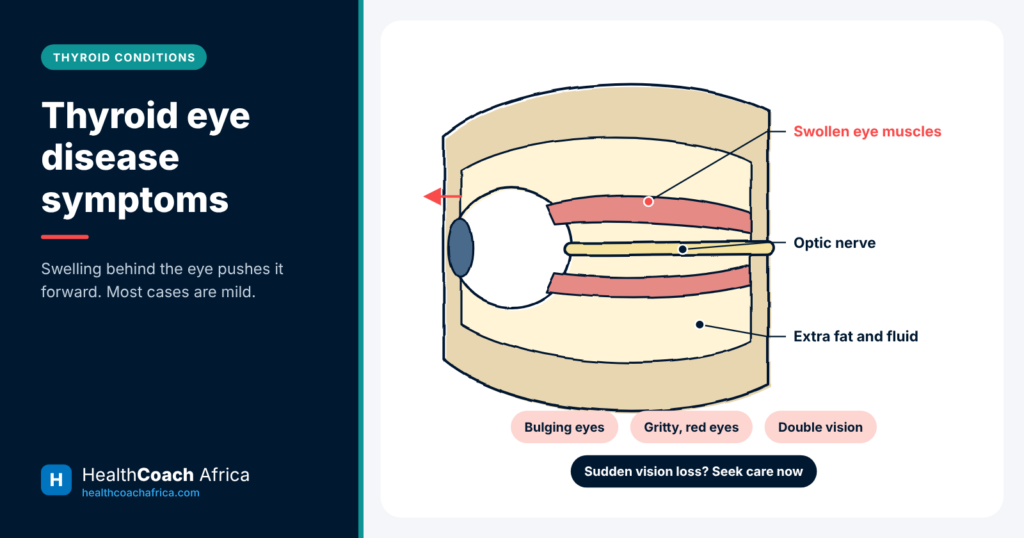
In Graves’ disease, the immune system produces antibodies that stimulate the thyroid. In thyroid eye disease, the immune system also targets tissues behind the eyes. The muscles that move the eyes and the fat around them become inflamed and swollen. This pushes the eyes forward and can affect how they move.
Thyroid eye disease can occur before, during or after an overactive thyroid. It can also occur, less commonly, in people with normal or underactive thyroid function.
Common thyroid eye disease symptoms
Gritty, sore or watery eyes
Dry eyes
Redness of the eyes or eyelids
Puffy eyelids or bags under the eyes
Sensitivity to light
A staring or startled appearance, because the upper eyelids are pulled back
Bulging eyes
Pain or pressure behind the eyes, especially when moving them
Double vision
Symptoms can affect one eye or both, often unequally.
Symptoms that need urgent attention
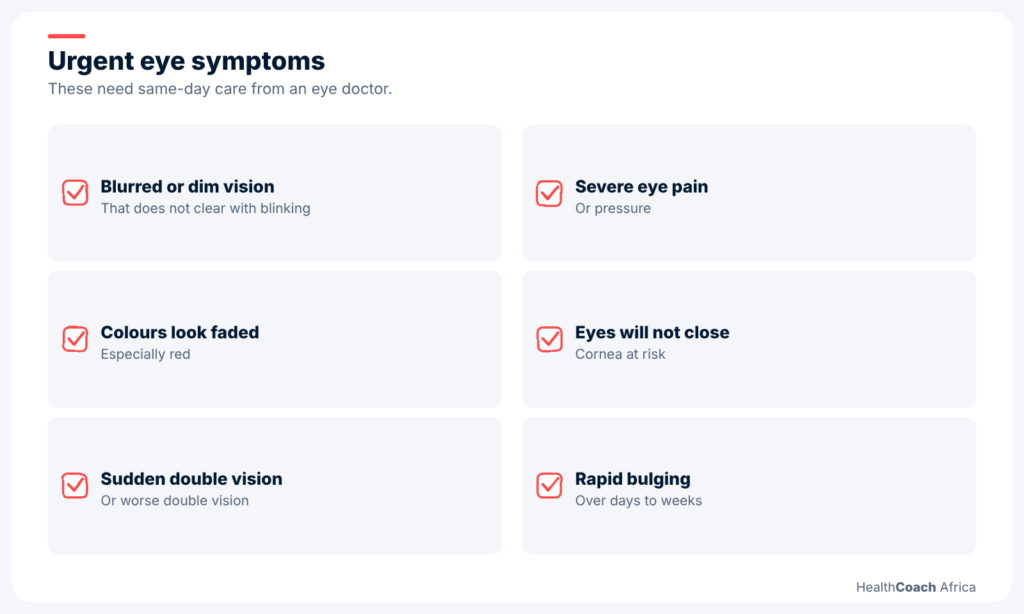
See an eye doctor urgently if you notice:
Blurred or dimmed vision that does not clear with blinking
Colours looking faded or washed out
Inability to close your eyes fully
Severe eye pain
These can be signs that the optic nerve is being squeezed or the cornea is damaged. Prompt treatment can save sight.
Urgent thyroid eye disease symptoms that need same-day eye care
Pressure on the optic nerve can cause permanent loss of sight if not treated quickly.
Thyroid eye disease symptoms: a daily check
People with Graves’ disease can check their eyes regularly. Look in the mirror each week. Ask yourself:
Are my eyes more red, puffy or watery than usual?
Do my eyes look more prominent?
Is my vision blurred, or are colours faded?
Do I see double, especially when looking up or to the side?
Can I close my eyes fully?
Write down any changes and share them with your doctor. Photographs taken every few months help show changes over time. Noticing thyroid eye disease symptoms early allows treatment to start in the active phase.
The active and inactive phases
Thyroid eye disease usually has two phases. The active phase, which lasts from several months to about two years, is when inflammation is present and symptoms may worsen. The inactive phase follows, when inflammation settles. Some changes, such as bulging, may remain. Treatment in the active phase aims to calm inflammation, while surgery in the inactive phase can correct lasting changes.
Smoking makes it worse
Smoking is the strongest risk factor that you can change. Smokers are more likely to develop thyroid eye disease, have more severe disease and respond less well to treatment. Stopping smoking is one 1 of the most important steps you can take. Avoid second-hand smoke too.
Controlling your thyroid
Keeping thyroid hormone levels stable helps the eyes. Both overactive and underactive levels can worsen eye disease. Take your thyroid medicines as prescribed and attend regular blood tests. If you are offered radioactive iodine treatment for Graves’ disease, tell your doctor about any eye symptoms. Radioactive iodine can worsen eye disease in some people, and a short course of steroids may be given to protect the eyes.
Working with an eye specialist
People with moderate or severe thyroid eye disease should be seen by an eye specialist, ideally one with experience in thyroid eye disease. The specialist will measure how far the eyes protrude, check eye movements, test vision and colour vision, and examine the cornea and optic nerve. Regular visits during the active phase allow treatment to be adjusted.
HUBPHARM PHARMACIST’S NOTE Lubricating eye drops used many times a day work best without preservatives, and gels at night protect eyes that do not fully close. Ask a HubPharm pharmacist which drops and gels suit you, and about stop-smoking support. Quitting is the single most powerful step for your eyes.
Self-care for mild symptoms
Many people with mild thyroid eye disease symptoms feel better with simple measures:
Use lubricating eye drops 2 or gels, without preservatives if used often
Wear sunglasses outdoors to reduce light sensitivity and wind irritation
Raise the head of the bed to reduce morning puffiness
Tape the eyelids closed at night if they do not close fully, using eye-safe tape
Use cool compresses for swelling
Selenium supplements 3 may help mild disease in some people, especially in areas where selenium intake is low. Ask your doctor before starting.
Medical treatments
For moderate to severe active disease, eye specialists may recommend:
Steroids, often given through a drip once a week for several weeks
Other immune-calming medicines in some cases
Newer targeted medicines, which are available in some countries but expensive
Radiotherapy to the eye area in selected cases
Thyroid eye disease symptoms and daily life
Living with thyroid eye disease can affect reading, driving, work and social life. Double vision can make driving unsafe. Prisms fitted to glasses can help. Good lighting, regular breaks from screens and lubricating drops ease eye strain. Tell your employer if you need adjustments. If you drive, check with your eye doctor whether your vision meets the required standard.
Thyroid eye disease symptoms in pregnancy
Thyroid eye disease can change during pregnancy and after birth. Some women notice improvement in pregnancy and a flare afterwards. If you have Graves’ disease and are planning a pregnancy, discuss your eye and thyroid treatment with your doctors in advance.
Surgery
When the disease is inactive, surgery can improve appearance and function:
Orbital decompression creates more space behind the eye, reducing bulging
Squint surgery corrects double vision
Eyelid surgery improves eyelid position and closure
Protecting your eyes at night
If your eyelids do not close fully during sleep, the surface of the eye can dry out. Use a thick lubricating gel at bedtime. Some people tape their lids gently closed with medical tape or wear a sleep mask. Sleeping with your head raised on extra pillows reduces swelling by morning.
Questions to ask your doctor
Is my eye disease active or inactive?
How severe is it, and is my sight at risk?
Which treatment do you recommend, and what are the side effects?
Should I take selenium?
How often should I have my eyes checked?
When could surgery help?
Write the answers down and keep a record of your treatments. It helps you track thyroid eye disease symptoms over time.
Stopping smoking: practical help
Quitting smoking is hard, but support makes it easier. Set a quit date. Remove cigarettes and lighters from your home. Tell friends and family. Nicotine replacement products, such as patches and gum, can reduce cravings. Avoid situations where you usually smoke. Each day without smoking helps protect your eyes, your heart and your lungs.
Emotional impact
Changes in appearance can affect confidence and mood. People may feel self-conscious or anxious. Talking to family, joining support groups and seeking counselling can help. Treatment can significantly improve appearance over time.
Myths about thyroid eye disease
“Once the thyroid is treated, the eyes will recover.” Eye disease can continue even when thyroid levels are normal.
“Bulging eyes cannot be treated.” Surgery and other treatments can help.
“Smoking does not matter.” Smoking is the biggest controllable risk factor.
Driving and work
Double vision and light sensitivity can make driving unsafe. Talk to your doctor before driving if your vision is affected. At work, take screen breaks and adjust lighting. Thyroid eye disease symptoms often improve with treatment.
Getting help
If you have Graves’ disease and notice any thyroid eye disease symptoms, tell your doctor and ask about seeing an eye specialist. The American Thyroid Association has more information, and our article on what the thyroid does explains the gland.For lubricating eye drops, stop-smoking support or help with thyroid medicines, message a HubPharm pharmacist or chat with Afiya on WhatsApp.
Medicines and products in this article
#
Medicine or product
What to know
1
Nicotine replacement
Over the counter
Patches or gum help you stop smoking.
2
Preservative-free lubricating eye drops
Over the counter
Soothe gritty, dry eyes. Use as often as needed.
3
Selenium
Over the counter
May help mild disease in some people. Ask your doctor first.
To order any of these, or to ask a pharmacist a question first, message HubPharm on WhatsApp or visit hubpharmafrica.com. Prescription medicines are supplied against a valid prescription.
Signs of Overactive Thyroid and How It Is Treated The thyroid is a small, butterfly-shaped gland in the front of the neck. It makes hormones that control how fast the body uses energy. When the gland makes too much hormone, everything speeds up: the…
Diabetic Eye Disease Signs: Protecting Your Sight… Diabetes is one of the leading causes of preventable blindness in working-age adults. High blood sugar slowly damages the tiny blood vessels at the back of the eye, often for years before any change in…
Thyroid Problems After Childbirth: What New Mothers… The months after giving birth bring huge changes. Tiredness, mood swings, weight changes and poor sleep are common, and most are normal. However, some new mothers develop thyroid problems after childbirth that cause similar symptoms.…
Thyroid Function Test Results: What TSH, T3 and T4… You have collected your laboratory report, and it is full of abbreviations, numbers and arrows. Thyroid function test results are among the most commonly requested blood tests, and also among the most misunderstood. This guide…