Every child is restless and distracted sometimes. But some children find it much harder than others to sit still, focus and control their impulses. They may be labelled stubborn, troublesome or lazy, and punished again and again. In many cases, these children have attention deficit hyperactivity disorder, or ADHD. Recognising ADHD signs in children helps parents and teachers respond with understanding and support rather than punishment. This guide explains the signs, how ADHD is diagnosed and what helps.
What is ADHD?
ADHD is a condition of brain development. It affects attention, activity levels and self-control. It is not caused by bad parenting, too much sugar or spiritual problems. ADHD often runs in families, and differences in brain development play a key role.
ADHD usually appears in early childhood. Many children continue to have some symptoms as teenagers and adults, though the signs often change with age.
The three types of ADHD
Doctors describe three presentations:
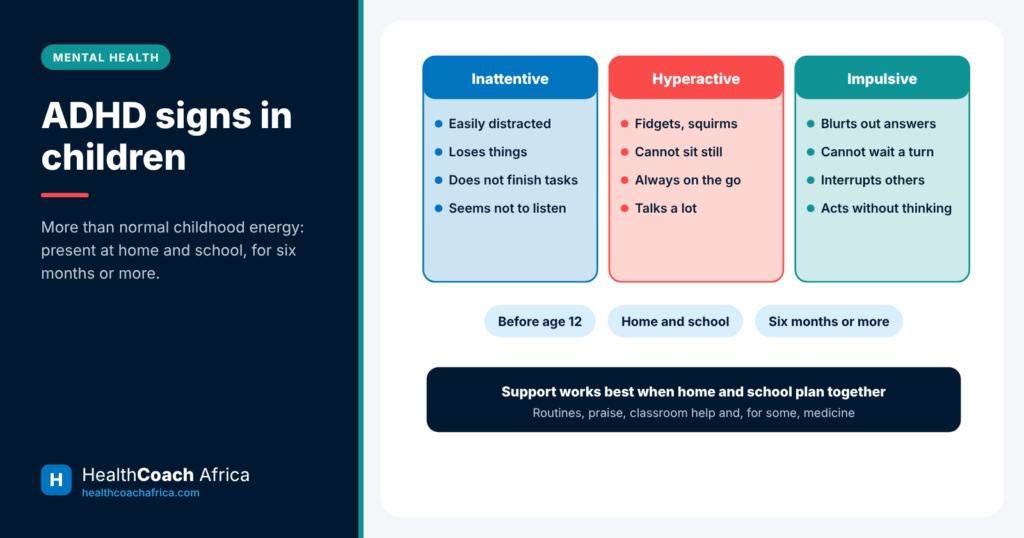
Mainly inattentive: trouble focusing, organising and finishing tasks. These children may seem dreamy or forgetful and are often missed, especially girls.
Mainly hyperactive and impulsive: constant movement, talking and acting without thinking.
Combined: a mix of both groups of signs. This is the most common type.
Inattentive ADHD signs in children
Makes careless mistakes in schoolwork
Has trouble staying focused on tasks or play
Does not seem to listen when spoken to directly
Starts tasks but does not finish them
Struggles to organise work and belongings
Avoids tasks that need sustained mental effort
Often loses books, pencils and other items
Is easily distracted by noise or movement
Is forgetful in daily activities
Hyperactive and impulsive signs
Fidgets, taps hands or squirms in the seat
Leaves the seat when expected to stay seated
Runs or climbs at inappropriate times
Finds it hard to play quietly
Seems always “on the go”
Talks excessively
Blurts out answers before questions are finished
Has trouble waiting for a turn
Interrupts others’ conversations or games
How ADHD differs from normal childhood energy
Most young children are active and easily distracted. ADHD signs in children are different in three ways:
They are more severe than in other children of the same age.
They appear in more than one setting, such as at home and at school.
They cause real problems with learning, friendships or family life.
Signs usually begin before the age of 12 and have lasted for at least six months by the time of diagnosis.
Conditions that can look like ADHD
Several other problems can cause similar behaviour. These include:
Hearing or vision problems
Learning difficulties, such as dyslexia
Poor sleep, sometimes caused by enlarged tonsils or snoring
Anxiety, stress or trauma at home
Hunger or poor nutrition
Epilepsy with absence seizures, which look like daydreaming
A good assessment checks for these possibilities. A child can also have ADHD together with another condition.
ADHD signs in children: girls are often missed
Girls with ADHD are more likely to have the inattentive type. Instead of disrupting the class, they may sit quietly, daydream and fall behind. Because they cause less trouble, their difficulties are often put down to laziness or low intelligence. Parents and teachers should look carefully at girls who struggle to focus, forget instructions or seem disorganised, even if they are well behaved.
How ADHD is diagnosed
There is no single blood test or scan for ADHD. A child psychiatrist, paediatrician or clinical psychologist makes the diagnosis. The assessment usually includes:
A detailed history from parents
Reports or questionnaires from teachers
Observation of the child
Hearing and vision checks
A review of development, sleep and family history
In Nigeria, assessments are available at teaching hospitals, federal neuropsychiatric hospitals and some private clinics. Waiting lists can be long, so ask for a referral early.
Treatment and support
Treatment works best when parents, teachers and health workers work together.
Parent training teaches practical strategies, such as clear routines, praise and consistent consequences.
Classroom support includes sitting the child near the teacher, breaking tasks into steps and allowing movement breaks.
Behavioural therapy helps children build self-control and social skills.
Medicine may be recommended for some children, usually from about age six, when other support is not enough.
Stimulant medicines, such as methylphenidate1, are the most common. They help many children focus and control impulses. Side effects can include poor appetite and difficulty sleeping. Doctors monitor height, weight, heart rate and blood pressure during treatment.
HUBPHARM PHARMACIST’S NOTE
ADHD medicines work best when they are given at the same time every morning, with breakfast, so that appetite and sleep are less affected. Parents often worry about side effects or about running out during school terms. Send your child’s prescription to a HubPharm pharmacist. We will explain how the medicine works, what side effects to watch for and how to track appetite, sleep and mood. We also help you plan refills ahead of school terms. Bring us your questions before each specialist review, so that you get the most from every appointment.
Practical tips for parents
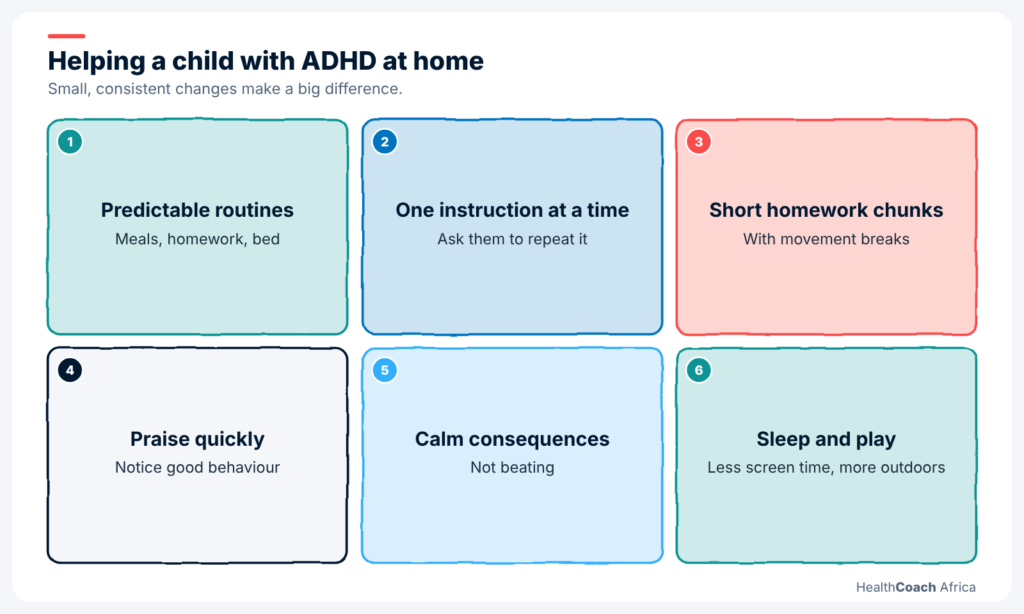
Six practical parenting strategies for ADHD signs in children, from routines to praise
Consistency between parents, carers and teachers matters most.
Keep daily routines predictable, with set times for meals, homework and bed
Give one instruction at a time, and ask the child to repeat it back
Break homework into short chunks with breaks
Praise effort and good behaviour quickly and often
Use calm, consistent consequences rather than beating
Make sure your child sleeps well and eats regular meals
Limit screen time, especially before bed
Encourage sport and outdoor play
ADHD and self-esteem
Children with ADHD are often criticised and punished more than other children. Over time, many begin to see themselves as “bad” or “stupid”. This can lead to low self-esteem, anxiety and depression. Notice what your child does well, whether in sport, music, drawing or kindness to others. Praise effort, not only results. A child who feels valued is more able to cope with challenges.
ADHD in teenagers
ADHD signs in children often change as they grow. Hyperactivity may ease, but restlessness, disorganisation and impulsive decisions can continue. Teenagers with ADHD are at higher risk of risky driving, substance use and school dropout. Ongoing support, open conversations and good routines help them succeed.
Caring for yourself as a parent
Parenting a child with ADHD can be exhausting. Share responsibilities with your partner and family. Take short breaks when you can. Talk to other parents in similar situations. Looking after your own wellbeing helps you stay calm and consistent, which benefits your child.
Tips for teachers
Teachers play a vital role. Seat the child away from windows and doors. Use short, clear instructions and visual reminders. Allow movement breaks. Notice and praise good behaviour. Share observations with parents in a supportive way. Recognising ADHD signs in children at school can transform a child’s education.
Myths about ADHD
“ADHD is just bad behaviour.” It is a recognised developmental condition.
“Too much sugar causes ADHD.” Research does not support this.
“Children grow out of it.” Many continue to have symptoms into adulthood, though support helps.
“Medicine turns children into zombies.” At the right dose, medicine helps children focus without changing their personality.
Working with your child’s school
Ask for a meeting with the class teacher and, where available, the school counsellor. Share the assessment report and agree on simple adjustments, such as extra time in tests, a quiet seat and regular feedback. A short weekly note between home and school helps everyone stay consistent. When parents and teachers recognise ADHD signs in children early and plan together, children are more likely to stay in school and do well.
Stimulant medicine that helps focus. Doctors monitor height, weight and heart rate.
To order any of these, or to ask a pharmacist a question first, message HubPharm on WhatsApp or visit hubpharmafrica.com. Prescription medicines are supplied against a valid prescription.
National Institute for Health and Care Excellence. Attention deficit hyperactivity disorder: diagnosis and management (NG87). https://www.nice.org.uk/guidance/ng87
Childhood Type 1 Diabetes: A Guide for Nigerian Families Many people think diabetes only affects older, overweight adults. However, children can develop diabetes too, and most children with diabetes have type 1. In Nigeria, childhood type 1 diabetes is often missed until the child…
Tramadol and Codeine Addiction: Signs, Dangers and… Tramadol and codeine are opioid medicines used to relieve pain and, in the case of codeine, to suppress coughs. Used correctly for a short time, they are helpful. However, misuse has become a serious problem…
Grief and Bereavement Support: Living Through Loss Losing someone we love is one of the hardest experiences in life. In Nigeria, families often come together quickly after a death, with visitors, prayers, ceremonies and long funeral preparations. When the crowds leave, many…
Diabetes in Nigeria: Why Blood Sugar Control Fails Diabetes in Nigeria does not usually fail in the clinic. Among people who reach a specialist and stay in care, control is often reasonable. It fails in the years before anyone tests you, and it…