Thyroid hormones play a vital role in pregnancy. They support the mother’s health and the baby’s brain and nervous system development, especially in the first months before the baby’s own thyroid starts working. When the thyroid is underactive or overactive, both mother and baby can be affected. Many women do not know they have a thyroid problem until it is tested. This guide explains thyroid disease in pregnancy, the signs, tests and safe treatments, and what happens after birth.
How pregnancy changes the thyroid
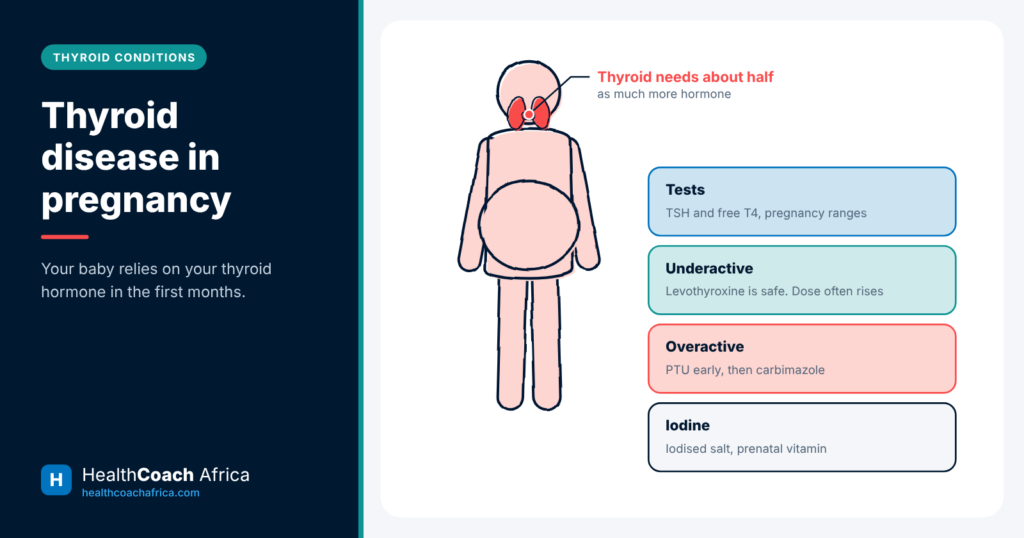
Pregnancy places extra demands on the thyroid. Hormones from the placenta stimulate it, and the body needs about half as much more thyroid hormone. The baby depends on the mother’s thyroid hormone for the first 12 weeks or so. Iodine needs also rise, because iodine is used to make thyroid hormone for both mother and baby.
Because of these changes, normal ranges for thyroid tests are different in pregnancy, especially in the first trimester.
Underactive thyroid in pregnancy
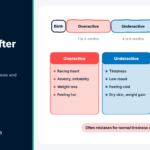
An underactive thyroid, or hypothyroidism, is the most common form of thyroid disease in pregnancy. Causes include Hashimoto’s thyroiditis, previous thyroid surgery or radioactive iodine treatment, and iodine deficiency.
Symptoms can be mistaken for normal pregnancy changes:
Tiredness
Weight gain
Feeling cold
Constipation
Dry skin
Low mood
Untreated, an underactive thyroid raises the risk of miscarriage, anaemia, high blood pressure, premature birth and problems with the baby’s development.
Overactive thyroid in pregnancy
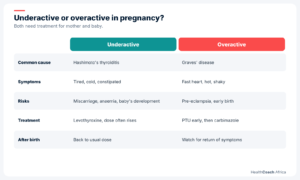
Comparison of underactive and overactive thyroid disease in pregnancy, symptoms and treatment
Symptoms can look like normal pregnancy changes, so testing matters.
An overactive thyroid, or hyperthyroidism, is less common. Graves’ disease is the main cause. Symptoms include:
Fast heartbeat
Weight loss or poor weight gain
Feeling hot and sweating
Shaking hands
Anxiety
Severe nausea and vomiting
Some women with severe morning sickness have temporarily high thyroid levels, which usually settle without treatment by mid-pregnancy. Untreated Graves’ disease can lead to pre-eclampsia, heart problems, premature birth and thyroid problems in the baby.
Thyroid disease in pregnancy and morning sickness
Severe vomiting in pregnancy, called hyperemesis gravidarum, can raise thyroid hormone levels for a while. This is usually caused by the pregnancy hormone hCG stimulating the thyroid. It usually settles by about 20 weeks without antithyroid medicine. Doctors check whether a woman has true Graves’ disease before starting treatment. Rest, fluids and anti-sickness medicine are the main treatments.
Who should be tested?
Your doctor may check your thyroid early in pregnancy if you:
Have a known thyroid condition or take thyroid medicine
Have had thyroid surgery or radioactive iodine
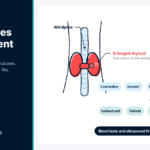
Have a goitre
Have type 1 diabetes or another autoimmune condition
Have a family history of thyroid disease
Have had previous miscarriages or fertility problems
Have symptoms of thyroid disease
Thyroid disease in pregnancy: the tests
The main tests are:
TSH, which is often lower than usual in early pregnancy
Free T4
Thyroid antibodies, such as TPO antibodies or TSH receptor antibodies
Your doctor will interpret results using pregnancy-specific ranges.
Treatment for an underactive thyroid
Levothyroxine is safe in pregnancy1 and essential for the baby. If you already take levothyroxine:
Contact your doctor as soon as you know you are pregnant
Many women need a dose increase straight away
TSH is usually checked every four to six weeks in the first half of pregnancy
Take levothyroxine on an empty stomach and keep it at least four hours apart from iron and calcium supplements, which are common in pregnancy.
HUBPHARM PHARMACIST’S NOTE
Pregnancy supplements are full of iron and calcium, both of which block levothyroxine if taken at the same time. Send your antenatal prescriptions to a HubPharm pharmacist. We will build a simple daily timetable that separates your thyroid tablet from your vitamins, recommend a prenatal vitamin with iodine if your doctor agrees and set reminders for your thyroid blood tests. If you take carbimazole or propylthiouracil, we will explain the side effects to report straight away.
Treatment for an overactive thyroid
Antithyroid medicines are used to control Graves’ disease in pregnancy. Propylthiouracil is often preferred2 in the first trimester, and carbimazole or methimazole may be used later. Doctors aim for the lowest dose that keeps the mother’s hormones in the upper-normal range, because these medicines also cross to the baby. Radioactive iodine must never be used in pregnancy.
Thyroid disease in pregnancy and breastfeeding
Levothyroxine is safe while breastfeeding. Antithyroid medicines can also be used in low to moderate doses, and doctors may suggest taking the dose just after a feed. If you are breastfeeding, tell your doctor before any thyroid scan or treatment, because radioactive iodine is not used while breastfeeding.
Iodine in pregnancy
Pregnant and breastfeeding women need more iodine. Using iodised salt helps. Many prenatal vitamins also contain iodine3. Ask your doctor or pharmacist to recommend a suitable supplement. Avoid high-dose iodine products and seaweed supplements unless advised.
After the baby is born
After delivery, women who took more levothyroxine during pregnancy usually return to their pre-pregnancy dose. A blood test about six weeks after birth checks the dose.
Women with Graves’ disease need close monitoring, because symptoms can return after birth. Babies of mothers with Graves’ disease may need checks for thyroid problems.
Some women develop postpartum thyroiditis in the year after birth, with a temporary overactive phase followed by an underactive phase. Tell your doctor about new tiredness, low mood, palpitations or weight changes.
All newborns benefit from screening for congenital hypothyroidism where available, because early treatment prevents developmental problems.
What families should know
Tiredness, low mood, palpitations and weight changes are often dismissed as normal in pregnancy. Partners and relatives can help by encouraging pregnant women with these symptoms to mention them at antenatal visits. Supporting a woman to take her medicine every day, and to attend blood tests, protects both mother and baby.
Thyroid disease in pregnancy: a checklist
Tell your antenatal team about any thyroid condition
Contact your doctor as soon as pregnancy is confirmed if you take thyroid medicine
Have regular thyroid blood tests
Take levothyroxine at least four hours apart from iron and calcium
Use iodised salt and a prenatal vitamin with iodine if advised
Have a thyroid check after birth if you have symptoms or a known condition
Emotional support
Being told you have thyroid disease in pregnancy can be worrying. Most women with well-treated thyroid conditions have healthy pregnancies and healthy babies. Ask questions, attend your appointments and share your worries with your partner, midwife or doctor.
Planning a pregnancy
If you have a thyroid condition and plan to become pregnant, see your doctor first. Your thyroid levels should be well controlled before conception. Women taking antithyroid medicines may need a change of treatment. Start folic acid and a prenatal vitamin with iodine before trying to conceive.
Questions to ask your antenatal team
Do I need thyroid tests in this pregnancy?
How often will my levels be checked?
Does my levothyroxine dose need to change?
Is my thyroid medicine safe for the baby?
Will my baby need thyroid tests after birth?
Writing down the answers helps you manage thyroid disease in pregnancy with confidence. Bring your notes to every visit and share them with your partner.
Your baby’s thyroid
Babies born to mothers with Graves’ disease may have thyroid antibodies that cross the placenta. Doctors may check the baby’s heart rate during pregnancy and the baby’s thyroid after birth. Babies born to mothers with an underactive thyroid usually need no special tests beyond routine newborn screening, where available. Ask your team what checks your baby needs.
Safe in pregnancy. Dose often increased as soon as pregnancy is confirmed.
2
Propylthiouracil
Prescription only
Often preferred for Graves’ disease in the first trimester.
3
Prenatal vitamin with iodine
Over the counter
Supports the baby’s brain development.
To order any of these, or to ask a pharmacist a question first, message HubPharm on WhatsApp or visit hubpharmafrica.com. Prescription medicines are supplied against a valid prescription.
Alexander EK, et al. 2017 guidelines of the American Thyroid Association for the diagnosis and management of thyroid disease during pregnancy and the postpartum. Thyroid. 2017;27(3):315-389. https://doi.org/10.1089/thy.2016.0457
Signs of Overactive Thyroid and How It Is Treated The thyroid is a small, butterfly-shaped gland in the front of the neck. It makes hormones that control how fast the body uses energy. When the gland makes too much hormone, everything speeds up: the…
Thyroid and Weight Gain: Separating Facts From Myths Many people who struggle with their weight wonder whether their thyroid is to blame. Others with a diagnosed thyroid problem find it hard to lose weight even on treatment. The link between thyroid and weight…
Thyroid Problems After Childbirth: What New Mothers… The months after giving birth bring huge changes. Tiredness, mood swings, weight changes and poor sleep are common, and most are normal. However, some new mothers develop thyroid problems after childbirth that cause similar symptoms.…
Goitre Causes and Treatment: Understanding a Swollen Thyroid A swelling at the front of the neck is a familiar sight in many Nigerian communities. People call it a goitre, and some believe it is caused by drinking certain water or by a curse.…