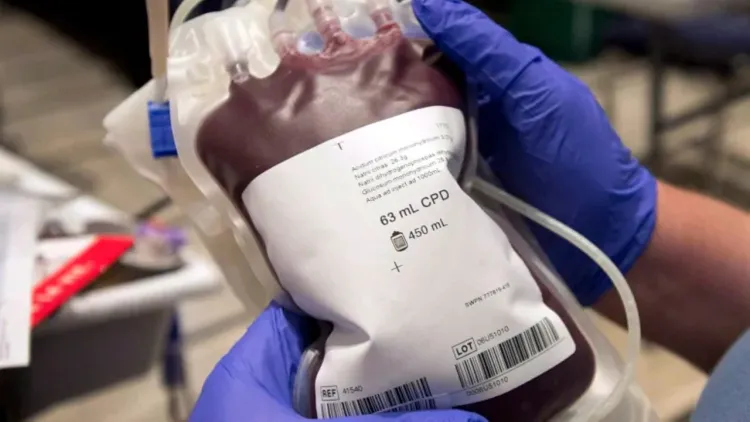
ABUJA, NIGERIA — Blood grouping alone cannot guarantee safe blood transfusion in Nigeria, and every unit must be crossmatched and screened for infections before it is given, medical laboratory scientists told Premium Times in a PT Health Watch report published on 7 November.
Blood grouping identifies a person’s ABO group and Rh type, but it “does not independently confirm compatibility between a donor and recipient,” the report said. Crossmatching tests whether antibodies in the recipient’s blood will react with the donor’s red cells, which can destroy them.
The steps for safe blood transfusion in Nigeria
Medical laboratory scientists Adedoye David and Olaiya Oluwatoba explained the checks that should take place before blood is released. They include blood grouping, compatibility testing, infection screening, checks of packed cell volume, monitoring of expiry dates and record-keeping.
Donated blood must be screened for hepatitis B, hepatitis C, HIV types 1 and 2, and syphilis. ELISA is the preferred screening method, and nucleic acid testing, where available, can detect some infections earlier, according to the report.
Laboratories are expected to work to ISO 15189, the international standard for quality and competence in medical laboratories. These steps are the foundation of safe blood transfusion in Nigeria’s hospitals and blood banks.
The hidden risks
The experts warned that some group O whole-blood donations contain high levels of anti-A and anti-B antibodies, which can cause haemolysis, the destruction of red blood cells, in recipients of other blood groups. This is one reason why group O blood is not automatically safe for everyone.
Acute haemolytic reactions can cause sudden fever, chills, low blood pressure and dark urine from haemoglobin. Delayed reactions may appear days or weeks after transfusion. The report noted that such complications can occasionally occur despite routine screening, which is why patients should be monitored during and after a transfusion.
Emergency release of blood before all compatibility tests are complete must follow established protocols, with proper authorisation and documentation, the experts said. They stressed that “scarcity should not justify abandoning essential safety procedures.”
Why blood safety is a national issue
Blood transfusion saves lives in many emergencies, including severe bleeding after childbirth, road traffic injuries, surgery, severe anaemia from malaria in children and complications of sickle cell disease. Postpartum haemorrhage is a leading cause of maternal death in Nigeria, and access to safe blood is often the difference between life and death.
Nigeria faces chronic shortages of blood. Voluntary donation rates are low, and many hospitals rely on family replacement donors or paid donors. WHO recommends that national blood supplies come from voluntary, unpaid donors, who are generally at lower risk of transmissible infections.
The National Blood Service Commission coordinates blood services, but many hospitals still run their own blood banks with varying standards. Where testing kits, reagents or trained staff are lacking, there is a risk that blood may be released after grouping alone.
Transfusion-transmitted infections remain a concern in countries with high rates of hepatitis B and HIV. Infections in the early window period, before tests can detect them, are one reason why careful donor selection and quality-assured testing are essential for blood transfusion in Nigeria.
Patients and families sometimes buy blood from outside sources when hospitals have none. Health experts warn that blood obtained outside a regulated blood bank may not have been screened or stored properly.
Storage is another safety issue. Red cells must be kept refrigerated within a narrow temperature range, platelets require different conditions, and blood that is stored incorrectly or used after expiry can harm patients. Power cuts can make cold storage difficult for hospital blood banks without reliable backup.
What patients and donors can do
Patients who need a transfusion can ask whether the blood has been crossmatched and screened, and should report symptoms such as fever, chills, back pain, breathlessness or dark urine during or after the transfusion.
Healthy adults can support safe blood transfusion in Nigeria by donating regularly at accredited blood centres. Regular voluntary donors help maintain a stable supply so that hospitals are not forced into rushed decisions in emergencies.
Hospitals can strengthen safety by documenting every step, keeping blood at the correct temperature, training staff and investigating any reaction. Laboratory accreditation and regular quality checks help ensure that standards are met.
The experts said medical laboratory scientists play a central role in transfusion safety and should be involved in hospital transfusion committees and in national efforts to improve blood services and patient safety.
Why it matters: Unsafe blood can transmit HIV or hepatitis or trigger fatal reactions, so testing must not be skipped even in emergencies.
Diabetes in Nigeria: Why Blood Sugar Control Fails Diabetes in Nigeria does not usually fail in the clinic. Among people who reach a specialist and stay in care, control is often reasonable. It fails in the years before anyone tests you, and it…
Malaria and Sickle Cell: Why Prevention Matters So Much Nigeria has more people living with sickle cell disease than any other country. It also has the highest malaria burden in the world. For families affected by both, malaria is not just a fever. It…
Medicine Traceability in Nigeria: How a Barcode… A fake antimalarial looks exactly like a real one. The box, the blister and the colour of the tablet can all be copied. What cannot be copied easily is a unique digital identity that is…
Malaria and Typhoid Fever: How to Tell Them Apart… "You have malaria and typhoid." It is one of the most common diagnoses given in Nigeria, and millions of people are treated for both at the same time. Yet malaria and typhoid fever are two…