Hashimoto’s thyroiditis is one of the most common causes of an underactive thyroid. It develops slowly, often over years, and many people feel tired and unwell long before they are diagnosed. The good news is that it is easy to test for and treat. With the right medicine and regular checks, most people live normal, active lives. This guide explains what the condition is, how it is diagnosed and treated, and practical tips for living with Hashimoto’s thyroiditis.
What is Hashimoto’s thyroiditis?
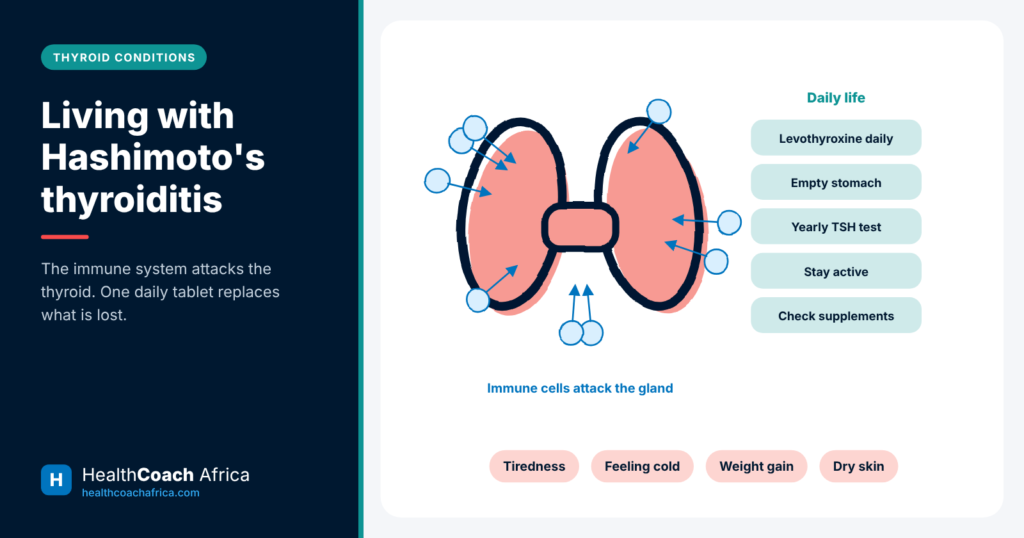
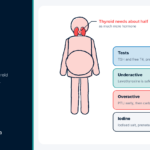
Hashimoto’s thyroiditis is an autoimmune condition. The immune system, which normally fights infections, mistakenly attacks the thyroid gland. Over time, the gland becomes inflamed and damaged, and it may stop making enough thyroid hormone.
It is much more common in women than men, and it often starts between the ages of 30 and 50. It can run in families. People with other autoimmune conditions, such as type 1 diabetes, vitiligo or rheumatoid arthritis, are more likely to have it.
Symptoms
In the early stages, many people have no symptoms. As the thyroid becomes underactive, symptoms develop slowly:
Tiredness and low energy
Weight gain
Feeling cold
Constipation
Dry skin and brittle hair
Hair thinning
Puffy face
Muscle aches and joint stiffness
Heavy or irregular periods
Low mood and poor memory
Slow heart rate
Some people develop a goitre, a painless swelling at the front of the neck.
How it is diagnosed
The diagnosis is made with blood tests:
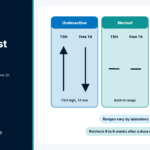
TSH, which is raised when the thyroid is underactive
Free T4, which is low or normal
TPO antibodies, which are raised in most people with Hashimoto’s thyroiditis
An ultrasound scan may be done if there is a goitre or a lump. Some people have positive antibodies and normal thyroid function for years. They need regular checks, because the thyroid may become underactive later.
Living with Hashimoto’s thyroiditis before treatment is needed
Some people have positive antibodies but normal thyroid hormone levels. They do not need levothyroxine yet. However, their thyroid may become underactive later. Doctors usually recommend a thyroid blood test every year, or sooner if symptoms appear. Living with Hashimoto’s thyroiditis at this stage means staying alert to symptoms, such as new tiredness, weight gain or feeling cold.
Treatment with levothyroxine
When the thyroid is underactive, treatment is simple: a daily levothyroxine tablet1 replaces the missing hormone. Your doctor will start a dose based on your weight, age and heart health, and adjust it using TSH blood tests every six to eight weeks until it is stable.
Most people need levothyroxine for life. Taking it correctly is key:
Take it on an empty stomach with water
Wait 30 to 60 minutes before eating or drinking tea, coffee or milk
Keep it at least four hours apart from iron, calcium and antacids
Take it every day, even when you feel well
HUBPHARM PHARMACIST’S NOTE
Many products marketed online for Hashimoto’s, including thyroid boosters and detox teas, contain hidden thyroid hormone, high-dose iodine or stimulants. Send a photo of any supplement to a HubPharm pharmacist before you start it. We will check what is known about it and whether it could upset your thyroid levels or interact with levothyroxine. We also offer monthly levothyroxine refills on the same brand, with reminders for your yearly blood test.
Living with Hashimoto’s thyroiditis day to day
Many people feel much better within weeks of starting treatment. Others take a few months to settle. These habits help:
Keep a symptom diary, noting energy, mood, weight and sleep
Attend regular blood tests, usually once a year once stable
Stay active, which helps energy, mood and weight
Eat a balanced diet with vegetables, fruit, whole grains, beans and fish
Sleep well, with a regular bedtime
Manage stress, through exercise, prayer, hobbies or talking to someone
Living with Hashimoto’s thyroiditis and exercise
Regular exercise helps with energy, mood, weight and heart health. Start gently if you feel tired, with short walks, and build up slowly. Strength exercises help maintain muscle and bone. Once your thyroid levels are stable, most people can return to their usual activities and sports.
Emotional wellbeing
Long-term conditions can affect mood and confidence. Low mood is also a symptom of an underactive thyroid. If you feel persistently sad, anxious or hopeless, tell your doctor. Treatment for mood, support groups and talking to people who understand can make living with Hashimoto’s thyroiditis easier.
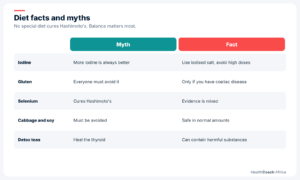
Diet facts and myths
Diet facts and myths for people living with Hashimoto’s thyroiditis, from iodine to gluten
Ask your doctor before taking supplements.
There is no special diet that cures Hashimoto’s thyroiditis. Some points to know:
Iodine: use iodised salt in normal amounts. Very high doses of iodine, such as from seaweed supplements, can worsen thyroid function in some people.
Gluten: a gluten-free diet is only needed if you also have coeliac disease, which is more common in people with autoimmune thyroid disease.
Selenium:2 some studies suggest small benefits on antibody levels, but evidence is mixed. Ask your doctor before taking supplements.
Soy and cabbage: these are safe in normal amounts. Simply keep soy away from the time you take your tablet.
Hashimoto’s thyroiditis and pregnancy
Women with Hashimoto’s thyroiditis who are planning a pregnancy should have their thyroid checked first. Thyroid hormone needs rise in pregnancy. Women taking levothyroxine usually need a higher dose as soon as pregnancy is confirmed. Even women with positive antibodies and normal thyroid function may need monitoring during pregnancy.
Other autoimmune conditions
People with Hashimoto’s thyroiditis have a higher chance of other autoimmune conditions, such as vitamin B12 deficiency, type 1 diabetes and coeliac disease. Tell your doctor about new symptoms, such as numbness, extreme thirst or ongoing diarrhoea.
Hair and skin care
Dry skin and hair thinning are common before treatment and usually improve as hormone levels settle, though hair can take several months. Use gentle moisturisers, avoid harsh chemical hair treatments while hair is fragile and eat a balanced diet. If hair loss continues, ask your doctor to check iron and vitamin levels.
Working with your healthcare team
Living with Hashimoto’s thyroiditis is a partnership between you and your healthcare team. Keep a list of your results and doses. Ask questions at each visit. Report side effects and new symptoms. Tell your doctor before starting any new medicine or supplement.
When symptoms persist
If you still feel unwell despite normal blood tests, talk to your doctor. Other causes, such as anaemia, vitamin D deficiency, depression, sleep apnoea or diabetes, may need checking. Do not increase your levothyroxine dose on your own.
Myths about Hashimoto’s thyroiditis
“Hashimoto’s can be cured with herbs.” No herbal product cures it. Levothyroxine replaces missing hormone.
“Thyroid patients must avoid all cabbage.” Normal portions are safe.
“Once I feel better, I can stop treatment.” Stopping causes symptoms to return.
“Weight gain is permanent.” Weight usually stabilises with treatment and healthy habits.
Living with Hashimoto’s thyroiditis at work
Tiredness and poor concentration can affect work before treatment is settled. Plan demanding tasks for times of day when you have more energy, take short breaks and keep water nearby. Most people find that symptoms improve as their dose is adjusted. If you need extra time off for appointments, speak to your employer.
Family members
Because Hashimoto’s thyroiditis runs in families, sisters, daughters and mothers may also benefit from a thyroid test if they have symptoms such as tiredness, weight gain or feeling cold. Share your diagnosis with close relatives, so they can mention it to their own doctors.
Daily tablet that replaces missing thyroid hormone.
2
Selenium supplements
Over the counter
Evidence is mixed. Ask your doctor before taking.
To order any of these, or to ask a pharmacist a question first, message HubPharm on WhatsApp or visit hubpharmafrica.com. Prescription medicines are supplied against a valid prescription.
Ralli M, et al. Hashimoto’s thyroiditis: an update on pathogenic mechanisms, diagnostic protocols, therapeutic strategies, and potential malignant transformation. Autoimmun Rev. 2020;19(10):102649. https://doi.org/10.1016/j.autrev.2020.102649
Thyroid and Weight Gain: Separating Facts From Myths Many people who struggle with their weight wonder whether their thyroid is to blame. Others with a diagnosed thyroid problem find it hard to lose weight even on treatment. The link between thyroid and weight…
Goitre Causes and Treatment: Understanding a Swollen Thyroid A swelling at the front of the neck is a familiar sight in many Nigerian communities. People call it a goitre, and some believe it is caused by drinking certain water or by a curse.…
Thyroid Disease in Pregnancy: Protecting Mother and Baby Thyroid hormones play a vital role in pregnancy. They support the mother's health and the baby's brain and nervous system development, especially in the first months before the baby's own thyroid starts working. When the…
Thyroid Function Test Results: What Your TSH and T4… You have had a thyroid blood test, and now you are holding a report full of letters and numbers: TSH, FT4, FT3, TPO. Some are marked high or low, and you are not sure what…