Lupus is often called “the great imitator” because its symptoms can look like many other illnesses. A young woman may have joint pain, tiredness, a rash and fever for months. She may be treated repeatedly for malaria or typhoid before anyone considers lupus. Lupus is more common and often more severe in women of African descent, so awareness matters in Nigeria. This guide explains lupus symptoms and treatment, how it is diagnosed and how people with lupus can live well.
What is lupus?
Systemic lupus erythematosus, usually called lupus, is an autoimmune disease. The immune system, which normally protects the body from infection, attacks healthy tissues instead. This causes inflammation in the skin, joints, kidneys, blood, heart, lungs and brain.
Lupus is a long-term condition. It tends to come and go, with periods of flares when symptoms are active and periods of remission when they settle.
Who gets lupus?
Women are affected about nine times more often than men
It most often starts between the ages of 15 and 45
It is more common and often more severe in women of African descent
It can run in families
The exact cause is unknown. Genes, hormones and environmental triggers, such as sunlight and some infections, all play a part.
Common lupus symptoms
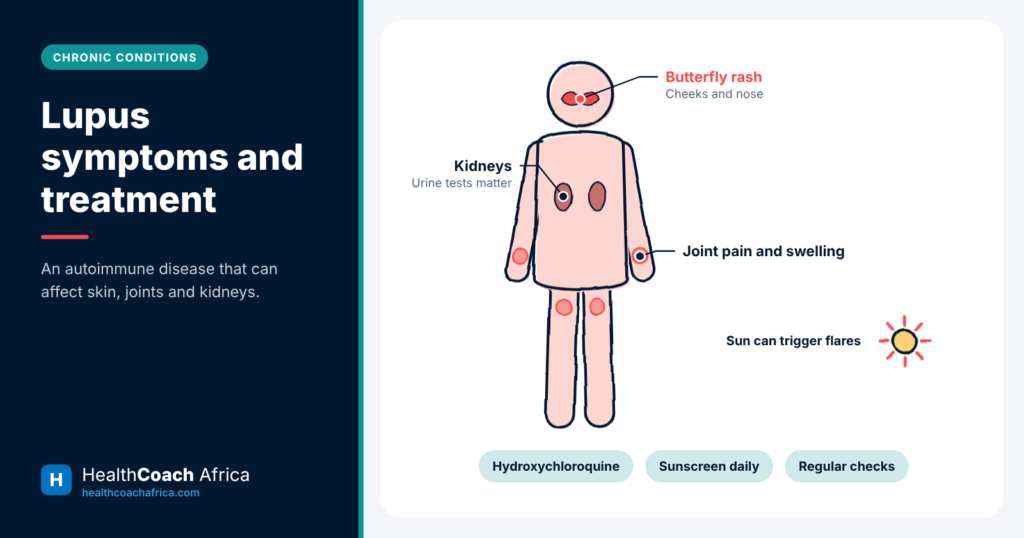
Lupus affects each person differently. Common symptoms include:
Extreme tiredness that does not improve with rest
Joint pain and swelling, often in the hands, wrists and knees
A rash across the cheeks and nose, shaped like a butterfly
Rashes after sun exposure
Fever without infection
Mouth ulcers, often painless
Hair loss, sometimes patchy
Chest pain when breathing deeply
Swollen glands
Fingers that turn white or blue in the cold
On dark skin, rashes may appear darker or as discoloured patches rather than red.
Serious organ involvement
Lupus can affect vital organs:
Kidneys (lupus nephritis): swollen legs, foamy urine, high blood pressure. This often has no symptoms early, so regular urine tests are important.
Blood: low red cells, white cells or platelets, causing anaemia, infections or bleeding.
Brain and nerves: headaches, seizures, memory problems or mood changes.
Heart and lungs: inflammation of the lining around the heart or lungs.
Lupus symptoms and treatment: why diagnosis takes time
Lupus symptoms often come and go, and they overlap with common illnesses such as malaria, typhoid, rheumatic fever and anaemia. Many people see several health workers before lupus is suspected. Keep a diary of symptoms, take photos of rashes and swelling, and note how long each episode lasts. Bring this record to appointments. Ask directly whether lupus could explain your symptoms, especially if you are a young woman with joint pain, rashes, fatigue and fever.
How lupus is diagnosed
There is no single test for lupus. Doctors combine symptoms, examination and tests:
ANA blood test: most people with lupus have a positive result, but many people without lupus do too.
Anti-dsDNA and other antibody tests, which are more specific
Complement levels, which often fall during active lupus
Full blood count
Urine tests for protein and blood
Kidney function tests
A rheumatologist usually confirms the diagnosis. Getting an early diagnosis allows treatment before organs are damaged.
Lupus symptoms and treatment: the main medicines
Treatment aims to control symptoms, prevent flares and protect organs. Common medicines include:
Hydroxychloroquine, recommended1 for almost everyone with lupus. It reduces flares, protects organs and improves survival. It needs yearly eye checks after the first few years.
Steroids, such as prednisolone2, to control flares quickly. Doctors aim to use the lowest dose for the shortest time.
Immunosuppressant medicines, such as azathioprine, mycophenolate or methotrexate, for more severe disease and to reduce steroid use.
Biological medicines, such as belimumab, in some cases.
Anti-inflammatory painkillers, for joint pain, if kidneys are healthy.
Never stop lupus medicines suddenly without advice, especially steroids.
Recognising a lupus flare
Warning signs of a flare, from lupus symptoms and treatment guidance
Contact your doctor early. Do not stop medicines on your own.
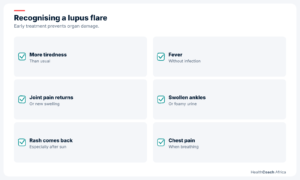
A flare is a period when lupus becomes more active. Warning signs include:
More tiredness than usual
New or worsening joint pain
A returning rash
Fever without infection
Swollen ankles or foamy urine
Chest pain when breathing
Contact your doctor early if you notice signs of a flare. Early treatment can prevent organ damage. Common triggers include sunlight, infections, stress, tiredness and stopping medicines.
HUBPHARM PHARMACIST’S NOTE
Hydroxychloroquine is the backbone of lupus treatment, but it is often in short supply, and people miss doses when stocks run out. Ask HubPharm to keep your hydroxychloroquine and other lupus medicines on a monthly refill with reminders and yearly eye-check prompts. A pharmacist will check every new prescription, including antibiotics and antimalarials, for interactions, and will supply a broad-spectrum sunscreen that suits your skin. If you take steroids, we will explain why they must never be stopped suddenly.
Sun protection
Sunlight can trigger lupus rashes and flares. Protect your skin every day:
Use a broad-spectrum sunscreen3 with SPF 30 or higher
Wear hats and long sleeves
Avoid the midday sun where possible
Remember that people with dark skin need sun protection too if they have lupus
Lifestyle tips
Rest and pace your activities
Exercise gently and regularly to keep joints and heart healthy
Eat a balanced diet low in salt
Do not smoke
Keep vaccinations up to date, after checking with your doctor
Treat infections early
Manage stress
Lupus symptoms and treatment: protecting the heart and bones
People with lupus have a higher risk of heart disease, partly because of inflammation and partly because of steroid treatment. Control blood pressure and cholesterol, stay active and do not smoke. Long-term steroids can also thin bones, so calcium, vitamin D and weight-bearing exercise are important. Your doctor may recommend a bone density scan.
Lupus and infections
Lupus itself and some lupus medicines can weaken the immune system. Infections may be more serious. Wash hands often, keep vaccines up to date after discussing them with your doctor, and seek care quickly for fever, cough or burning when passing urine. Malaria prevention with nets and repellents is especially important.
Working with your care team
Lupus care often involves several specialists, including a rheumatologist, kidney doctor, skin doctor and obstetrician. Keep a record of your medicines, test results and appointments. Regular blood and urine tests help catch problems early. Understanding lupus symptoms and treatment helps you take an active role in your care.
Lupus and pregnancy
Many women with lupus have healthy pregnancies, but planning is essential. The best time to conceive is when lupus has been quiet for at least six months. Some lupus medicines must be stopped or changed before pregnancy, while hydroxychloroquine is usually continued. Pregnancy should be managed by a team that includes a rheumatologist and an obstetrician. Use reliable contraception until you and your doctor agree it is safe to conceive.
Living with lupus
Lupus can be unpredictable and isolating. Many people look well on the outside while feeling exhausted inside. Family, friends and employers may not understand. Support groups, counselling and clear information help. With modern treatment, most people with lupus live long, full lives.
Myths about lupus
“Lupus is contagious.” Lupus cannot be passed from person to person.
“Lupus only affects the skin.” It can affect many organs.
“Lupus is a death sentence.” With treatment, most people live normal lifespans.
“Herbal remedies can cure lupus.” There is no cure, and some herbs can harm the kidneys or liver.
Supporting someone with lupus
Offer practical help on bad days, and believe them when they say they are exhausted, even if they look well.
Recommended for almost everyone with lupus. Needs eye checks.
2
Prednisolone
Prescription only
Controls flares. Lowest dose, shortest time. Do not stop suddenly.
3
Broad-spectrum sunscreen
Over the counter
Daily protection from flare-triggering sunlight.
To order any of these, or to ask a pharmacist a question first, message HubPharm on WhatsApp or visit hubpharmafrica.com. Prescription medicines are supplied against a valid prescription.
Fanouriakis A, et al. EULAR recommendations for the management of systemic lupus erythematosus: 2023 update. Ann Rheum Dis. 2024;83(1):15-29. https://doi.org/10.1136/ard-2023-224762
Malaria and Typhoid Fever: How to Tell Them Apart… "You have malaria and typhoid." It is one of the most common diagnoses given in Nigeria, and millions of people are treated for both at the same time. Yet malaria and typhoid fever are two…
Chronic Pain Management in African Women: A… Chronic pain, characterized by persistent discomfort lasting for more than three to six months, is a global health challenge that affects millions of individuals. In the context of Africa, chronic pain poses unique considerations, and…
Mpox Symptoms and Prevention: A Clear Guide Mpox, formerly known as monkeypox, is a viral infection that has been reported in Nigeria for many years. Since 2017, cases have been recorded across many states, and the disease has gained global attention through…
Malaria in Young Children: How to Spot It, Treat It… For many Nigerian parents, a hot child means malaria. Sometimes it is. Sometimes the fever is caused by a cold, an ear infection, pneumonia or typhoid. Malaria in young children can be mild one day…