Sciatica causes pain that shoots from the lower back or buttock down the back of the leg, sometimes to the foot. It may burn, tingle or feel like an electric shock. Long hours of sitting, heavy lifting and poor posture are common triggers. The good news is that most sciatica improves within four to six weeks. Gentle movement and the right sciatica pain relief exercises help speed recovery. This guide explains what causes sciatica, exercises to try, other self-care and the warning signs that need urgent care.
What is sciatica?
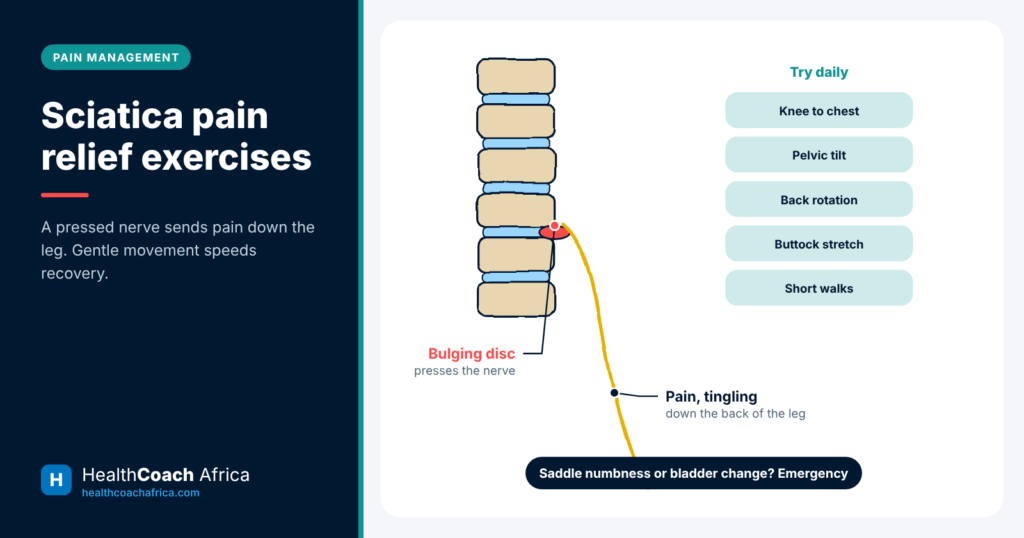
The sciatic nerve is the longest nerve in the body. It runs from the lower back, through the buttock and down each leg. Sciatica happens when something presses on or irritates the nerve roots in the lower back.
Common causes include:
A slipped, or herniated, disc
Narrowing of the spinal canal, called spinal stenosis, in older adults
Wear and tear in the spine
A tight muscle in the buttock pressing on the nerve
Pregnancy, which can put pressure on the nerve
Symptoms
Pain in the buttock or down the back of one leg
Pain that is worse when sitting, coughing or sneezing
Numbness, tingling or pins and needles in the leg or foot
Weakness in the leg or foot
Lower back pain, though leg pain is often worse
Sciatica usually affects one side.
Keep moving
Bed rest is no longer recommended. Staying as active as possible helps recovery. Keep doing everyday activities, even if you need to go slowly. Avoid sitting for long periods. Get up and walk around every 30 minutes.
Sciatica pain relief exercises
Gentle sciatica pain relief exercises with simple instructions for home
Walking is one of the best exercises. Start short and build up.
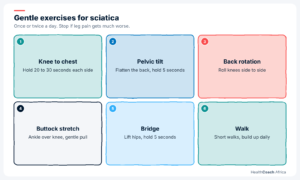
Try these gentle exercises once or twice a day. Move slowly. Stop any exercise that makes leg pain much worse or causes new numbness.
Knee to chest. Lie on your back with knees bent. Gently pull one knee towards your chest with both hands. Hold for 20 to 30 seconds. Repeat on the other side. Do three times.
Pelvic tilt. Lie on your back with knees bent. Tighten your stomach muscles and flatten your lower back against the floor. Hold for five seconds, then relax. Repeat ten times.
Lower back rotation. Lie on your back with knees bent and together. Gently roll both knees to one side, keeping your shoulders on the floor. Hold for ten seconds. Repeat on the other side. Do five times each side.
Buttock stretch. Lie on your back. Cross one ankle over the opposite knee. Gently pull the lower knee towards your chest until you feel a stretch in the buttock. Hold for 20 to 30 seconds. Repeat on the other side.
Bridge. Lie on your back with knees bent and feet flat. Squeeze your buttocks and lift your hips off the floor. Hold for five seconds, then lower. Repeat ten times.
Walking is one of the best sciatica pain relief exercises. Start with short walks and increase gradually.
Sciatica pain relief exercises at work
Many people develop sciatica from long hours of sitting or driving. At work, stand up and walk every 30 minutes. Do gentle back extensions while standing, placing your hands on your lower back and leaning gently backwards. Shift your position often. These simple sciatica pain relief exercises can be done in a few minutes without equipment.
Sciatica in pregnancy
Back and leg pain is common in pregnancy as the baby grows and posture changes. Gentle stretches, a pregnancy support belt, warm compresses and sleeping on your side with a pillow between your knees can help. Avoid anti-inflammatory painkillers in pregnancy unless advised. Paracetamol is usually the safest option. Tell your midwife about leg weakness or numbness.
Pain relief
Anti-inflammatory painkillers, such as ibuprofen or naproxen1, may help for a short time if suitable for you.
Paracetamol alone has little effect on sciatica but may help when combined with other treatments.
Heat or cold packs on the lower back2 can ease pain. Use whichever feels better.
Some medicines used for nerve pain are not recommended for sciatica, because research shows little benefit. Strong painkillers such as codeine and tramadol should only be used briefly and under medical advice. Ask a pharmacist before taking any painkiller.
HUBPHARM PHARMACIST’S NOTE
Several painkillers are sold as nerve pain cures, but research shows some of them do little for sciatica, and strong opioids can cause dependence. Message a HubPharm pharmacist for advice on which painkiller is safe for you, especially if you have stomach, kidney or heart problems, and for heat or cold packs. If your pain has lasted more than a few weeks, we can help you find a physiotherapist. If you have numbness in the saddle area or bladder changes, go to hospital first.
Posture and daily habits
Sit with your back supported and feet flat on the floor
Use a small cushion or rolled towel in the curve of your lower back
Lift by bending your knees, not your back, and keep loads close to your body
Avoid twisting while lifting
Sleep on your side with a pillow between your knees, or on your back with a pillow under your knees
Avoid high heels
How long does sciatica last?
Most episodes improve within four to six weeks. For some people, symptoms last longer or come back. Doctors may recommend further tests, such as an MRI scan, if pain lasts more than six to twelve weeks, if weakness develops or before considering injections or surgery. Keep doing your sciatica pain relief exercises during this time.
Preventing sciatica from returning
Keep active with regular walking or swimming
Strengthen your core and back muscles
Maintain a healthy weight
Lift safely
Take breaks from sitting
Stop smoking, which affects spinal discs
Physiotherapy
If sciatica does not improve within a few weeks, a physiotherapist can assess you and design a personal exercise programme. Hands-on treatment may also help. Regular exercises at home remain the key to recovery.
Red flag symptoms
Seek emergency care immediately if you have sciatica with:
Numbness around the genitals, buttocks or inner thighs
Difficulty passing urine or loss of bladder control
Loss of bowel control
Weakness in both legs
Rapidly worsening leg weakness
These can be signs of cauda equina syndrome, a serious condition that needs urgent surgery.
See a doctor soon if you have sciatica with fever, unexplained weight loss, a history of cancer or pain after a serious fall or accident.
Myths about sciatica
“Rest in bed until the pain goes.” Staying active helps recovery more than bed rest.
“Sciatica always needs surgery.” Most people recover without surgery.
“Spinal manipulation by untrained people cures sciatica.” Forceful manipulation can cause harm.
“Exercise will make it worse.” Gentle sciatica pain relief exercises usually help.
Sciatica pain relief exercises for older adults
Older adults with spinal stenosis often find that leaning forward, such as on a shopping trolley, eases leg pain. Gentle walking, cycling on a stationary bike and seated stretches are often comfortable. Use a chair or wall for balance when exercising. Choose sciatica pain relief exercises that feel comfortable, and avoid movements that cause sharp pain.
Mattress and sleep
A medium-firm mattress suits most people with back and leg pain. If your mattress sags, a firm board under it can help until you can replace it. Good sleep supports recovery.
To order any of these, or to ask a pharmacist a question first, message HubPharm on WhatsApp or visit hubpharmafrica.com. Prescription medicines are supplied against a valid prescription.
National Institute for Health and Care Excellence. Low back pain and sciatica in over 16s: assessment and management (NG59). https://www.nice.org.uk/guidance/ng59
Diabetic Foot Ulcer Prevention: Protecting Your Feet… A small blister or a cut from walking barefoot seems harmless. For a person with diabetes, it can become an open wound that refuses to heal. Infection can spread quickly, and in severe cases a…
Lower Back Pain Relief: What Works and When to Worry Low back pain is the leading cause of disability worldwide. The World Health Organization estimates that it affected 619 million people in 2020, and almost everyone experiences it at least once. Market traders, drivers, office…
Diabetic Nerve Pain Relief: Easing Burning Feet and Tingling Many people with diabetes develop nerve damage, especially in the feet and legs. For some, it causes numbness. For others, it causes burning, tingling or stabbing pain that is worse at night and makes sleep…
Neck Pain Relief Tips: Easing a Stiff, Sore Neck Neck pain is very common. Long hours on phones and laptops, poor sleeping positions, heavy loads carried on the head and long journeys in traffic all strain the neck. Most neck pain is not serious…