If you have diabetes, or your doctor suspects it, you will hear a lot about the HbA1c test. It is one of the most important numbers in diabetes care. Yet many people do not know what it measures or how to read the result on their lab report. This guide explains what HbA1c results mean, the ranges doctors use and how the test helps you stay healthy.
What HbA1c measures
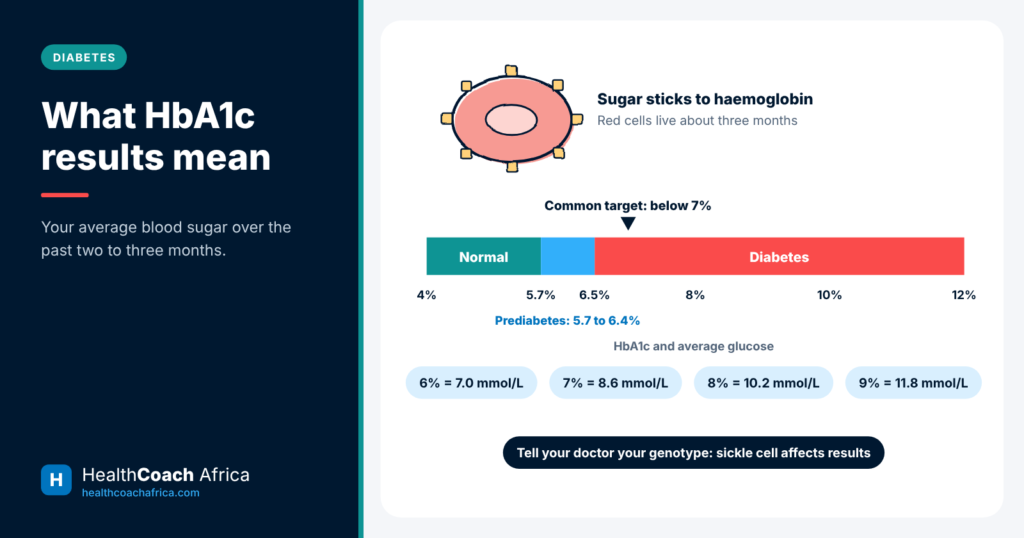
Haemoglobin is the protein in red blood cells that carries oxygen. When sugar circulates in the blood, some of it sticks to haemoglobin. The higher your blood sugar, the more sugar sticks. This sugar-coated haemoglobin is called glycated haemoglobin, or HbA1c.
Red blood cells live for about three months. Therefore, HbA1c reflects your average blood sugar over the past two to three months, rather than on the day of the test. That is what makes it so useful. A single finger-prick reading shows a moment in time, while HbA1c shows the bigger picture.
You do not need to fast before an HbA1c test. It is a simple blood test, taken from a vein or, in some clinics, from a finger prick.
Two ways of reporting results
Laboratories report HbA1c in one of two units:
Percentage (%), which is common in Nigeria and the United States
Millimoles per mole (mmol/mol), which is used in the United Kingdom and many other countries
Both describe the same thing. For example, 6.5% equals 48 mmol/mol, and 7% equals 53 mmol/mol. Check which unit appears on your report before comparing it with targets.
What HbA1c results mean for diagnosis
For people who have not been diagnosed with diabetes, the result falls into one of three ranges:
Normal: below 5.7% (below 39 mmol/mol)
Prediabetes: 5.7% to 6.4% (39 to 47 mmol/mol)
Diabetes: 6.5% or higher (48 mmol/mol or higher)
These ranges follow the guidance used by the US National Institute of Diabetes and Digestive and Kidney Diseases.Some countries use a slightly different prediabetes range, starting at 6.0%. A diagnosis of diabetes is usually confirmed with a second test, unless you also have clear symptoms such as heavy thirst and weight loss.
Prediabetes is a warning sign, not a sentence. Losing a modest amount of weight and staying active can bring blood sugar back to normal in many people.
What HbA1c results mean if you have diabetes
Once you have diabetes, HbA1c shows how well your treatment is working. For many adults, the target is below 7% (53 mmol/mol). Keeping HbA1c in this range lowers the risk of damage to the eyes, kidneys, nerves and feet.
However, targets are personal. Your doctor may set a lower target if you are young and newly diagnosed. Older people, and those who have frequent low blood sugar or other serious illnesses, may be given a higher target, such as below 8%. Ask your doctor which target applies to you.
From HbA1c to average blood sugar
HbA1c can be converted into an estimated average glucose. This helps to link it with the readings on your home meter 1 :
6% is about 7.0 mmol/L (126 mg/dL)
7% is about 8.6 mmol/L (154 mg/dL)
8% is about 10.2 mmol/L (183 mg/dL)
9% is about 11.8 mmol/L (212 mg/dL)
10% is about 13.4 mmol/L (240 mg/dL)
If your home readings look good but your HbA1c is high, you may be missing high readings after meals or at night. Testing at different times of day can reveal the pattern.
How often to test
Most people with diabetes should have an HbA1c test:
Every three months when treatment is being changed or the result is above target
Every six months once the result is stable and within target
Testing more often than every three months is rarely useful, because HbA1c changes slowly. After a change in medicine or diet, wait about three months to see the full effect.
When HbA1c can be misleading
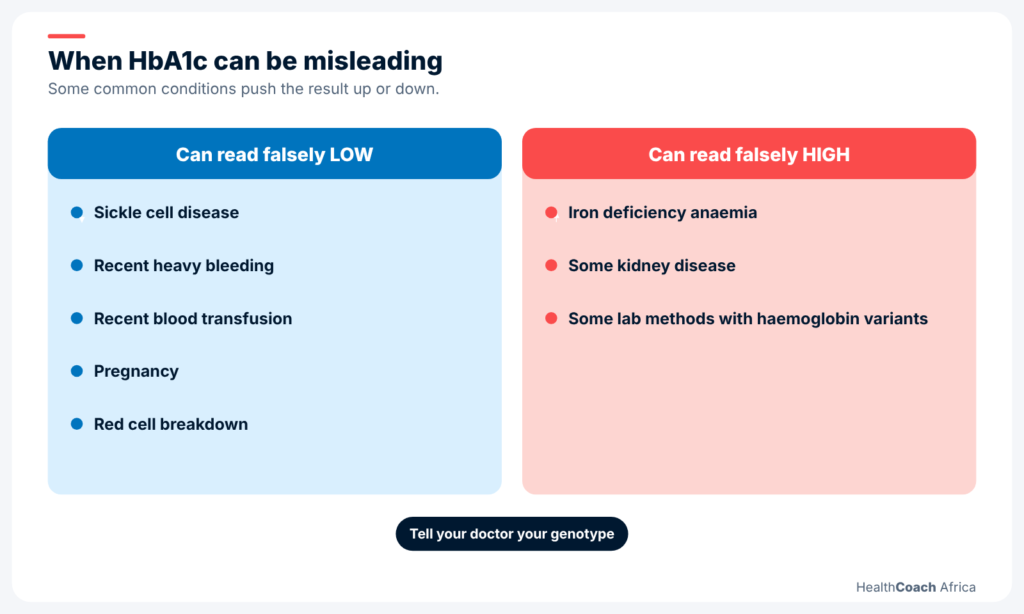
Because the test depends on red blood cells and haemoglobin, some conditions affect the result:
Sickle cell disease and other haemoglobin variants. In sickle cell disease, red blood cells live for a shorter time, so HbA1c can be falsely low. Some lab methods are also affected by sickle cell trait. Tell your doctor your genotype.
Anaemia. Iron deficiency can raise HbA1c falsely, while anaemia from blood loss or red cell breakdown can lower it.
Recent blood transfusion or heavy bleeding
Pregnancy, when HbA1c tends to run lower
Advanced kidney disease
These issues are common in Nigeria. In such cases, doctors rely more on fasting glucose, home monitoring or other tests to judge what HbA1c results mean for you.
HUBPHARM PHARMACIST’S NOTE A high HbA1c is often caused by missed doses rather than the wrong medicine. Simple tools, such as a pill organiser, refill reminders and a fixed time for each tablet, can help. Send your latest HbA1c result to a HubPharm pharmacist and we will review your medicine routine with you.
Chart of conditions that make HbA1c falsely low or high, explaining what HbA1c results mean
If your HbA1c does not match your home readings, ask your doctor whether one of these applies.
How to lower your HbA1c
If your result is above target, small steps can make a real difference:
Take medicines as prescribed 2 . Missed doses are one of the most common reasons for a high result.
Watch carbohydrate portions. Smaller servings of swallows, rice and yam, balanced with vegetables and protein, reduce sugar spikes.
Cut out sweet drinks. Replace soft drinks, malt and juice with water.
Move more. A 30-minute walk on most days improves how your body uses insulin.
Check your blood sugar at home. This helps you see what affects your levels.
Keep your appointments. Your doctor may need to adjust your treatment.
Lowering HbA1c by even one percentage point reduces the risk of long-term complications.
HbA1c and home glucose checks
HbA1c and home blood sugar checks answer different questions. HbA1c tells you the average over months. Your home meter tells you what is happening right now, for example after a meal, before driving or when you feel unwell. Used together, they give the clearest picture of control.
Bring your meter or a written record of readings to the clinic. When your doctor explains what HbA1c results mean, the home readings help to show where the problem lies, such as high fasting levels or spikes after particular meals.
Questions to ask at your next visit
What is my HbA1c target, and why?
Is my latest result going up or down compared with last time?
Could my genotype, anaemia or kidneys be affecting the result?
Should I change my medicine, my diet or both?
When should I next repeat the test?
Writing the answers down helps you remember what HbA1c results mean for your own care, and to track progress over the year.
It also helps to keep all your results in one place, such as a small notebook or a photo album on your phone. Over time, the list shows how your lifestyle and medicines are working, and makes it easier for any new doctor to understand your history.
Reading your lab report
A typical report shows your result, the unit and a reference range. Note that the printed reference range is usually the normal range for people without diabetes. If you have diabetes, compare your result with the target your doctor has set, not with the normal range. Keep a record of each result, so that you can see whether it is improving over time.
Getting help
Understanding what HbA1c results mean helps you take control of diabetes. Bring your past results to every clinic visit, and ask your doctor what your target is. Learn more ways to protect yourself in our guide to preventing diabetes complications.For help reading your report, choosing a glucose meter or reviewing your medicines, message a HubPharm pharmacist or ask Afiya on WhatsApp.
Medicines and products in this article
#
Medicine or product
What to know
1
Glucose meter and test strips
Over the counter
For home checks of blood sugar between HbA1c tests. Bring your readings to each clinic visit.
2
Diabetes tablets and insulin
Prescription only
Include metformin, sulphonylureas, newer tablets and insulin. Taking them consistently is the biggest single factor in HbA1c.
To order any of these, or to ask a pharmacist a question first, message HubPharm on WhatsApp or visit hubpharmafrica.com. Prescription medicines are supplied against a valid prescription.
Normal Blood Sugar Levels: What Your Numbers Mean Someone checks your sugar at a chemist, reads out a number, and either looks worried or does not. Nobody explains which test it was, which units it is in, or what the threshold actually is.…
Thyroid Function Test Results: What TSH, T3 and T4… You have collected your laboratory report, and it is full of abbreviations, numbers and arrows. Thyroid function test results are among the most commonly requested blood tests, and also among the most misunderstood. This guide…
Medical Record Officer at Solid Rock Hospital Since our beginning, our secret at Solid Rock Hospital (SRH) has been our foundation which was built based on the principles of Christ. We have continued in this pursuit, which equips us to serve our clients…
Nigerian Diet for Diabetes: A Practical Guide to Eating Well A diagnosis of diabetes often comes with a long list of foods you are told to stop eating. Many people believe they must give up eba, rice, yam and plantain for ever. That is not…