Atrial fibrillation, often called AF, is the most common type of irregular heartbeat in adults. It becomes more common with age and with conditions such as high blood pressure. AF itself is rarely life-threatening, but it greatly increases the risk of stroke. Many people only learn they have AF after a stroke. Understanding atrial fibrillation stroke risk, and how to lower it, can prevent disability and death.
What happens in atrial fibrillation
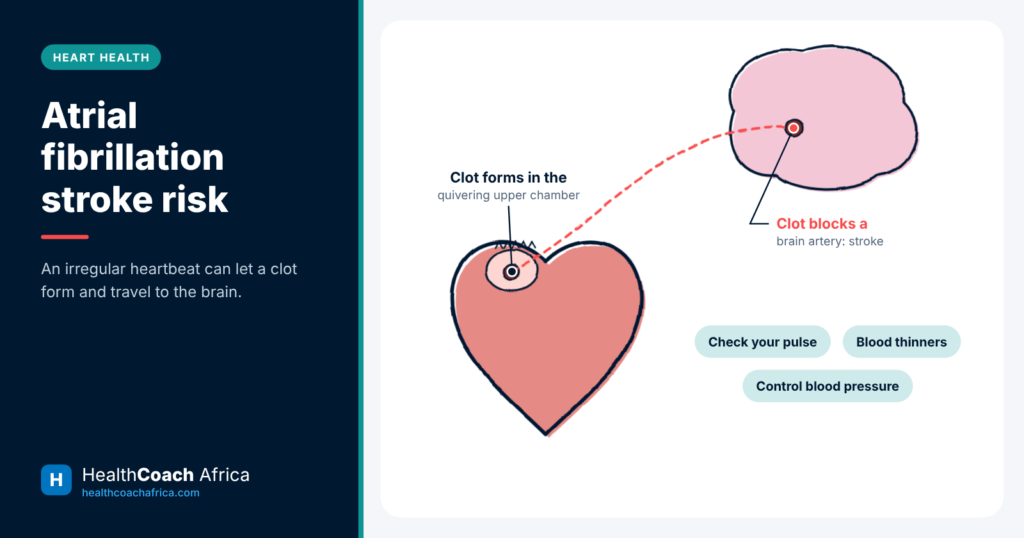
The heart has four chambers. The upper chambers, called the atria, normally contract in a regular rhythm, controlled by electrical signals. In AF, these signals become chaotic. The atria quiver rather than squeeze properly, and the heartbeat becomes irregular and often fast.
Why AF causes strokes
When the atria quiver, blood does not flow smoothly. It can pool in a small pouch in the left atrium, where clots may form. If a clot breaks off, it can travel to the brain, block an artery and cause a stroke.
People with AF have about five times the risk of stroke compared with people without AF. Strokes caused by AF also tend to be more severe. That is why atrial fibrillation stroke risk must be taken seriously.
Signs of atrial fibrillation
Some people with AF have no symptoms. Others notice:
A fast, irregular or fluttering heartbeat, called palpitations
Shortness of breath
Tiredness and reduced ability to exercise
Dizziness or light-headedness
Chest discomfort
AF can come and go, called paroxysmal AF, or be present all the time.
Check your pulse
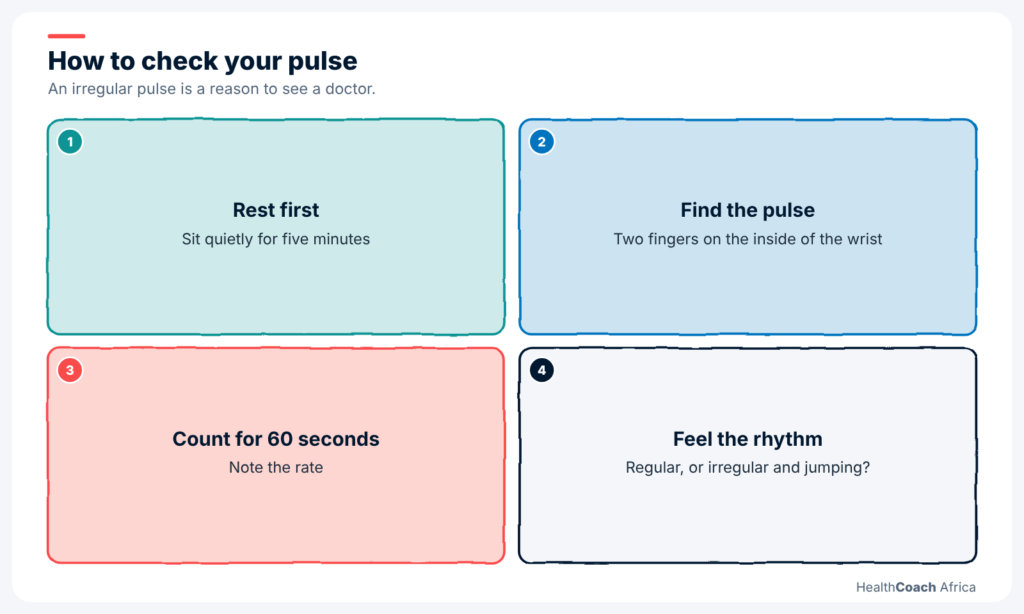
Checking your pulse is a simple way to spot an irregular heartbeat. Place two fingers on the inside of your wrist, below the thumb. Count the beats for 30 seconds and notice whether the rhythm is regular. If it feels irregular, especially if you are over 65 or have high blood pressure, see a doctor. Some home blood pressure monitors and smartwatches can also flag an irregular rhythm.
Check your pulse” section. Alt text: How to check your pulse to spot atrial fibrillation stroke risk early
A pulse that feels irregular, even once, deserves an ECG.
Causes and risk factors
AF is more likely with:
Older age
High blood pressure
Heart valve disease, including rheumatic heart disease
Heart failure or previous heart attack
An overactive thyroid
Diabetes and obesity
Heavy alcohol use
Sleep apnoea
Treating these conditions can reduce AF and atrial fibrillation stroke risk.
How AF is diagnosed
AF is confirmed with an electrocardiogram, or ECG, which records the heart’s electrical activity. If AF comes and goes, you may need a portable monitor worn for one or more days. Blood tests check thyroid and kidney function, and an echocardiogram, an ultrasound of the heart, looks at the heart’s structure and valves.
Atrial fibrillation stroke risk and age
The risk of both AF and stroke rises with age. AF is uncommon in young adults but becomes much more common after 65. Older people with AF almost always benefit from a blood thinner, unless there is a strong reason not to use one. Age alone should not stop someone from receiving stroke prevention. A careful doctor will weigh the risk of stroke against the risk of bleeding.
Warfarin and food
Vitamin K, found in green leafy vegetables such as spinach, ugwu and lettuce, affects how warfarin works. You do not need to avoid these foods. Instead, eat a similar amount each week, so that your INR stays stable. Tell your doctor before making big changes to your diet. Alcohol, herbal remedies and many antibiotics can also change the effect of warfarin.
Assessing your stroke risk
Doctors use a scoring system to estimate atrial fibrillation stroke risk. Points are given for factors such as age, high blood pressure, diabetes, heart failure, previous stroke, vascular disease and female sex. A higher score means a higher risk and a stronger case for blood-thinning treatment.
Blood thinners prevent most AF strokes
Anticoagulants, often called blood thinners, reduce clot formation and greatly lower the risk of stroke in AF. Options include:
Warfarin, 1 which needs regular blood tests, called INR tests, and careful attention to diet and other medicines
Newer anticoagulants, such as rivaroxaban 2 , apixaban and dabigatran, which need fewer blood tests but can cost more
Aspirin is not recommended to prevent strokes in AF. It is less effective and still causes bleeding.
HUBPHARM PHARMACIST’S NOTE Warfarin interacts with many common medicines, including some antibiotics, antimalarials and herbal products, and a missed dose of the newer blood thinners leaves you unprotected quickly. Message a HubPharm pharmacist before starting anything new. We will check the combination, set dose reminders and help you keep a record of your INR results.
Taking blood thinners safely
Take your dose at the same time every day
Do not skip doses or double up
Tell every doctor, dentist and pharmacist that you take a blood thinner
Avoid anti-inflammatory painkillers such as ibuprofen and diclofenac unless advised
Check before starting herbal products or supplements, which can interact
Seek help for signs of bleeding, such as black stools, blood in urine, vomiting blood, severe bruising or a severe headache
Myths about atrial fibrillation
“If I feel well, my AF is not dangerous.” Atrial fibrillation stroke risk exists even without symptoms.
“Aspirin is enough to prevent a stroke.” Anticoagulants are much more effective for AF.
“Blood thinners make bleeding to death likely.” Serious bleeding is uncommon, and the protection against stroke usually outweighs the risk.
“AF is caused by stress.” Stress can trigger episodes, but the underlying causes are usually heart and blood pressure problems.
Controlling the heart rate and rhythm
Treatment also aims to control symptoms. Rate control medicines, such as beta blockers 3 , slow the heart. Some people benefit from treatments to restore a normal rhythm, such as medicines, an electrical shock called cardioversion, or a procedure called ablation, which is available in a few centres.
Lifestyle changes that help
You can reduce AF episodes and atrial fibrillation stroke risk by:
Controlling blood pressure
Losing excess weight
Limiting alcohol
Stopping smoking
Staying active
Treating sleep apnoea
Living well with AF
Most people with AF lead full, active lives. Keep your appointments, take your medicines and know your pulse. Carry a card that says you take a blood thinner. Discuss any planned surgery or dental work with your doctor in advance. Lowering atrial fibrillation stroke risk is a long-term partnership with your health team.
Know the signs of stroke
Everyone with AF and their family should know the FAST signs: face drooping, arm weakness, speech difficulty and time to get help. If these appear, go to hospital immediately.
Alcohol and AF
Heavy drinking, and even binge drinking on a single occasion, can trigger episodes of AF. Some people find that their AF improves greatly when they cut down or stop alcohol. Alcohol also increases bleeding risk in people taking blood thinners. If you have AF, keep alcohol to a minimum and discuss it openly with your doctor.
Questions to ask your doctor
What is my stroke risk score?
Which blood thinner is best for me, and why?
How often do I need blood tests?
What should I do if I miss a dose?
Which painkillers are safe for me?
Should I be checked for an overactive thyroid or sleep apnoea?
Writing down the answers helps you manage atrial fibrillation stroke risk with confidence.
Travelling with AF
Carry a list of your medicines and a card that says you take a blood thinner. Pack enough tablets for the whole trip, plus extra in case of delays. Keep doses on schedule, even across time zones. On long journeys, drink water and move your legs regularly. Know where to find medical help at your destination. Good planning keeps your atrial fibrillation stroke risk low while you travel.
Blood thinner that needs regular INR blood tests. Many interactions.
2
Rivaroxaban, apixaban or dabigatran
Prescription only
Newer blood thinners with fewer blood tests. Do not miss doses.
3
Beta blockers
Prescription only
Slow the heart rate in AF.
To order any of these, or to ask a pharmacist a question first, message HubPharm on WhatsApp or visit hubpharmafrica.com. Prescription medicines are supplied against a valid prescription.
Signs of Overactive Thyroid and How It Is Treated The thyroid is a small, butterfly-shaped gland in the front of the neck. It makes hormones that control how fast the body uses energy. When the gland makes too much hormone, everything speeds up: the…
Warning Signs of Stroke: Act FAST and Save a Life A stroke happens when blood flow to part of the brain is cut off, or when a blood vessel in the brain bursts. Brain cells begin to die within minutes. In Nigeria and across Africa,…
Low Salt Diet Tips for a Healthier Heart High blood pressure affects millions of Nigerians, and many do not know they have it. One of the biggest causes is eating too much salt. Salt is everywhere in our kitchens: in seasoning cubes, stews,…
High Blood Pressure in Nigeria: Why Treatment Stops Working Most people who lose control of high blood pressure in Nigeria were never lost to the health system. They were diagnosed. They collected a prescription. Many even took the tablets for a while. Then something…