In Nigeria, almost every stomach pain is called “ulcer”. People blame hunger, pepper and stress, and treat themselves with antacids or herbal mixtures. Some of these pains are true ulcers. Many are not. Understanding what a peptic ulcer is, what causes it and how it is cured can save you years of discomfort and protect you from dangerous complications. In this guide, peptic ulcer disease explained in plain language covers the causes, symptoms, tests and treatment.
What is a peptic ulcer?
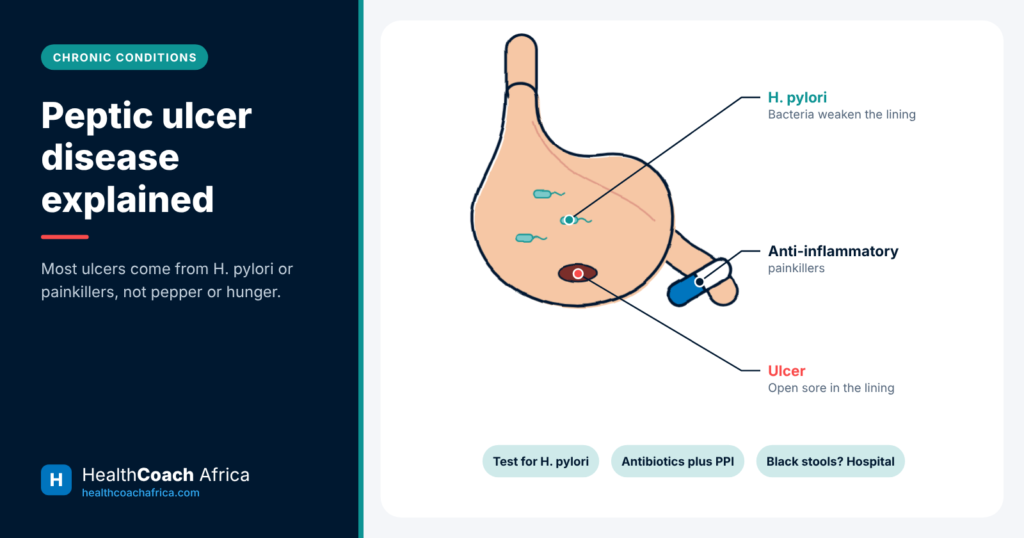
A peptic ulcer is an open sore in the lining of the stomach or the first part of the small intestine, called the duodenum. Ulcers in the stomach are called gastric ulcers. Ulcers in the duodenum are called duodenal ulcers.
The stomach lining is normally protected from stomach acid by a layer of mucus. When this protection is damaged, acid can eat into the lining and form an ulcer.
The two main causes
Most peptic ulcers have one of two causes:
Helicobacter pylori (H. pylori) infection. This common bacterium lives in the stomach lining and weakens its protective layer. Many people in Nigeria carry H. pylori, often from childhood.
Anti-inflammatory painkillers (NSAIDs). Regular use of medicines such as ibuprofen, diclofenac, naproxen and aspirin can damage the stomach lining.
Smoking and heavy alcohol use make ulcers more likely and slow healing.
What does not cause ulcers
Contrary to popular belief, peptic ulcers are not caused by:
Skipping meals
Eating pepper or spicy food
Stress alone
These may worsen symptoms in some people, but they are not the root cause. Treating the true cause is the key to a cure.
Symptoms
Burning or gnawing pain in the upper middle part of the belly
Pain that may improve or worsen with food
Pain that wakes you at night
Bloating or belching
Feeling full quickly
Nausea
Some people, particularly older adults and those taking painkillers, have no pain until a complication occurs.
Danger signs
Bleeding ulcers can be life-threatening. Go to hospital, do not wait.
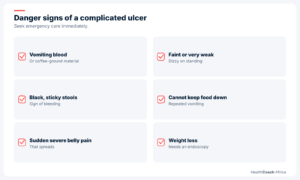
Seek emergency care immediately if you:
Vomit blood or material like coffee grounds
Pass black, sticky stools
Have sudden, severe belly pain that spreads
Feel faint, dizzy or very weak
Keep vomiting and cannot keep food down
These may signal a bleeding ulcer, a perforation or a blockage, all of which can be life-threatening.
Peptic ulcer disease explained: indigestion or ulcer?
Not every burning stomach pain is an ulcer. Functional dyspepsia, acid reflux, gallstones, gastritis and even heart problems can cause similar pain. That is why testing matters. People over 55 with new indigestion, and anyone with weight loss, difficulty swallowing, persistent vomiting or anaemia, should have an endoscopy to rule out stomach cancer and other serious causes. With peptic ulcer disease explained properly by your doctor, you can choose the right treatment.
How ulcers are diagnosed
Your doctor will ask about your symptoms and medicines. Tests may include:
H. pylori tests, using a breath test, stool test or blood test
Upper endoscopy, a thin camera passed through the mouth to view the stomach and duodenum directly, especially for people over 55, those with danger signs or weight loss
Blood tests for anaemia
Stop acid-reducing medicines for two weeks before a breath or stool test if your doctor advises, because they can cause false negative results.
Peptic ulcer disease explained: treatment
Treatment depends on the cause:
If H. pylori is found, treatment combines two antibiotics with an acid-reducing medicine called a proton pump inhibitor (PPI), such as omeprazole1, usually for one to two weeks. This is called eradication therapy2.
If painkillers are the cause, stop them if possible and take a PPI for several weeks to allow healing.
PPIs reduce acid and help the ulcer heal, usually over four to eight weeks.
After H. pylori treatment, a repeat test is often done to confirm the infection has cleared. Complete every dose of the antibiotics. Stopping early can lead to treatment failure and resistance.
Peptic ulcer disease explained: H. pylori in families
pylori often spreads within households, especially in childhood, through saliva, contaminated food and water. If one family member has an ulcer caused by H. pylori, others may also carry the bacterium. Not everyone needs testing, but family members with symptoms should see a doctor. Good hand hygiene and safe water help reduce spread.
HUBPHARM PHARMACIST’S NOTE
H. pylori treatment involves several tablets taken together for one to two weeks, and missing doses is the main reason it fails. Send your prescription to a HubPharm pharmacist. We will pack your eradication therapy into a clear daily plan, send reminders for every dose and explain the side effects that are normal. We will also review any painkillers you take for joint or back pain, and help you plan a safer option with your doctor.
If you need painkillers
People who need regular anti-inflammatory painkillers for arthritis or other conditions should discuss safer options with a doctor. Paracetamol3 is gentler on the stomach. If an NSAID is essential, a PPI can be taken alongside to protect the stomach. Do not combine several anti-inflammatory products.
Side effects of treatment
Eradication therapy can cause a metallic taste, nausea, diarrhoea or dark stools. These usually settle after treatment ends. Some antibiotics interact with alcohol, so avoid drinking during treatment. If side effects are severe, contact your pharmacist or doctor rather than stopping the medicines.
Long-term use of acid-reducing medicines
PPIs are very effective, but long-term use without a clear reason can have side effects. These may include lower levels of some vitamins and minerals and a higher risk of some infections. Your doctor should review whether you still need a PPI after an ulcer has healed. Do not stop suddenly if you have taken it for a long time, as symptoms can rebound. Ask about reducing gradually.
Ulcers in older adults
Older adults are more likely to take painkillers and blood thinners, and they may have no pain until an ulcer bleeds. Families should watch for black stools, tiredness and paleness in older relatives and seek help quickly.
Healthy habits for healing
Stop smoking
Limit alcohol
Eat regular, balanced meals
Avoid foods that clearly worsen your symptoms
Take medicines exactly as prescribed
Myths about ulcers
“Ulcers are caused by hunger.” Most are caused by H. pylori or painkillers.
“Milk cures ulcers.” Milk may soothe briefly but can increase acid later.
“Once you have an ulcer, you have it for life.” Most ulcers can be cured.
“Antacids are enough treatment.” Antacids ease symptoms but do not cure the cause.
Questions to ask your doctor
Do I need an H. pylori test or an endoscopy?
Which painkillers are safe for me?
How long should I take acid-reducing medicine?
Do I need a repeat test after treatment?
What symptoms mean I should come back urgently?
Peptic ulcer disease explained for families
Families can help by encouraging relatives with long-term indigestion to get tested rather than relying on antacids. Watch older relatives who take painkillers for black stools or paleness. With peptic ulcer disease explained clearly at home, families can spot danger signs early and seek help quickly.
Smoking and ulcers
Smoking increases stomach acid, weakens the stomach lining and slows ulcer healing. It also makes ulcers more likely to come back. Stopping smoking is one of the most effective steps you can take. Ask a pharmacist about nicotine replacement products to help you quit, and set a quit date within the next two weeks.
Reduces acid and helps ulcers heal over four to eight weeks.
2
H. pylori eradication therapy
Prescription only
Two antibiotics plus a PPI for one to two weeks.
3
Paracetamol
Over the counter
Gentler on the stomach than anti-inflammatory painkillers.
To order any of these, or to ask a pharmacist a question first, message HubPharm on WhatsApp or visit hubpharmafrica.com. Prescription medicines are supplied against a valid prescription.
National Institute for Health and Care Excellence. Gastro-oesophageal reflux disease and dyspepsia in adults (CG184). https://www.nice.org.uk/guidance/cg184
Please follow and like us:
Views:45
Related Posts:
Stomach Cancer Warning Signs: When Indigestion Is… Many Nigerians live with indigestion for years. They buy antacids, try herbal mixtures and call every pain an "ulcer". Most of the time, the cause is simple. But stomach cancer warning signs can look exactly…
Chronic Pain Management in African Women: A… Chronic pain, characterized by persistent discomfort lasting for more than three to six months, is a global health challenge that affects millions of individuals. In the context of Africa, chronic pain poses unique considerations, and…
Diabetes in Nigeria: Why Blood Sugar Control Fails Diabetes in Nigeria does not usually fail in the clinic. Among people who reach a specialist and stay in care, control is often reasonable. It fails in the years before anyone tests you, and it…
Nutrition During Cancer Treatment: What to Eat and Why Cancer and its treatment place heavy demands on the body. Chemotherapy, radiotherapy and surgery all increase your need for energy and protein, while side effects such as nausea and mouth sores make eating harder. Good…